

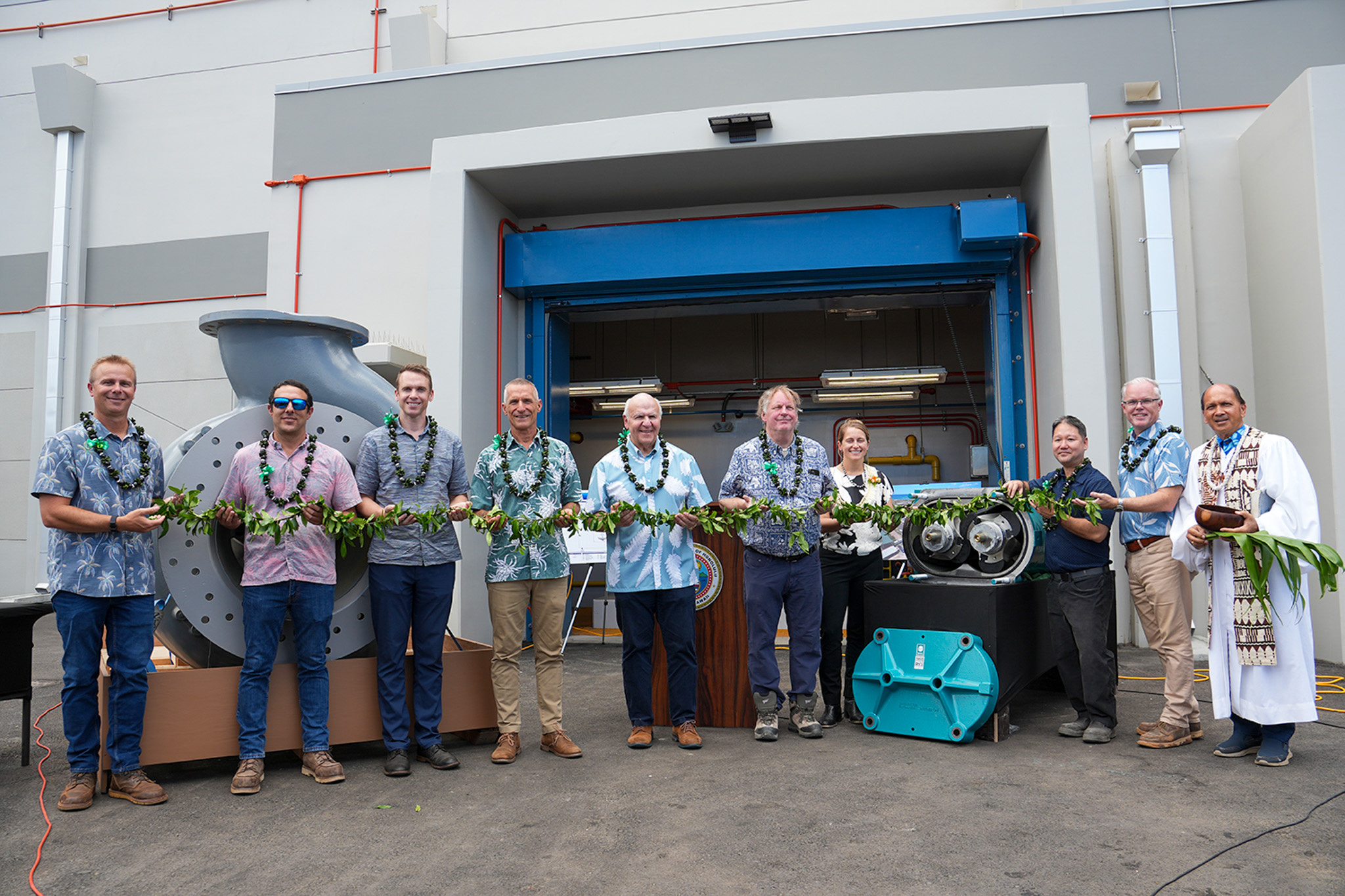
On August 11, 2026, the City and County of Honolulu marked a major milestone at the Sand Island Wastewater Treatment Plant (WWTP) Secondary Treatment Phase 1 project in Hawaii with a grand opening and blessing of the new facility. The milestone represents the culmination of five years of complex construction within an active wastewater treatment plant, with the project reaching completion three months ahead of schedule.
Building Within an Active Wastewater Treatment Plant
One of the project’s defining construction challenges was integrating new major systems within an active treatment plant while maintaining ongoing operations throughout the work.
Construction across the Sand Island WWTP included deep excavation and dewatering, auger-cast-in-place pile installation, cast-in-place concrete structures, underground utilities, electrical infrastructure, process equipment and extensive mechanical and process piping ranging from 1.5 inches to 96 inches in diameter.
Connecting new infrastructure to existing plant systems required detailed sequencing, close coordination and strategic planning. Each tie-in was carefully evaluated and scheduled to minimize operational impacts while allowing construction to advance safely and efficiently.
Keeping the Project on Schedule Using Innovation
With dense process systems competing for space throughout the new facilities, digital coordination played an important role in planning and executing the work. The project team used VDC tools to coordinate multiple disciplines, visualize installation sequencing and identify potential conflicts before they reached the field.
Laser scanning allowed existing conditions to be compared against coordinated models, giving the team the ability to refine piping layouts before fabrication and installation. Drone mapping provided an additional tool for documenting site conditions, communicating progress and helping teams plan upcoming work. Together, these technologies supported collaboration across disciplines, helped resolve issues earlier and kept construction moving efficiently.
Virtual Design and Construction (VDC)
With dense process systems competing for space throughout the new facilities, digital coordination played an important role in planning and executing the work. The project team used VDC tools to coordinate multiple disciplines, visualize installation sequencing and identify potential conflicts before they reached the field.
Laser scanning allowed existing conditions to be compared against coordinated models, giving the team the ability to refine piping layouts before fabrication and installation. Drone mapping provided an additional tool for documenting site conditions, communicating progress and helping teams plan upcoming work. Together, these technologies supported collaboration across disciplines, helped resolve issues earlier and kept construction moving efficiently.
Strength in Self-Performed Work
Hensel Phelps self-performed more than half of the project’s work, giving the team greater control over critical construction activities and sequencing. Over the course of the project, approximately 1,400 people contributed more than 1.2 million work hours. That work was supported by an extensive project community that included 109 trade partners and vendors and approximately 350 suppliers and service providers.
Self-performing a significant share of critical trades, from concrete placement to structural steel, gives Hensel Phelps direct oversight of schedule, quality and cost on some of the most technically demanding parts of a project.
Sludge Seeding
As the project transitioned into clean fluid startup, Hensel Phelps employees supported six months of 24-hour coverage at the plant. Team members worked nights, weekends and extended shifts to support testing, commissioning and integration of the new systems.
The effort required detailed planning and specialized training to support work within the facility’s deep process structures. The team also implemented a data-driven activated sludge seeding strategy that significantly accelerated the startup process and contributed to earlier project delivery.
Delivering Complex Wastewater Infrastructure Through Collaboration
Upgrading critical wastewater infrastructure while keeping an active facility operating requires careful planning, technical expertise and strong collaboration from start to finish. At Sand Island WWTP, Hensel Phelps worked alongside a network of talented people and organizations whose collaboration, craftsmanship and commitment helped the team navigate challenges, execute highly technical work and successfully bring the project to completion ahead of schedule.
Watch the Sand Island WWTP Secondary Treatment Phase 1 blessing ceremony to meet the people, partnerships and construction expertise that brought the project to life.


