

About the Project
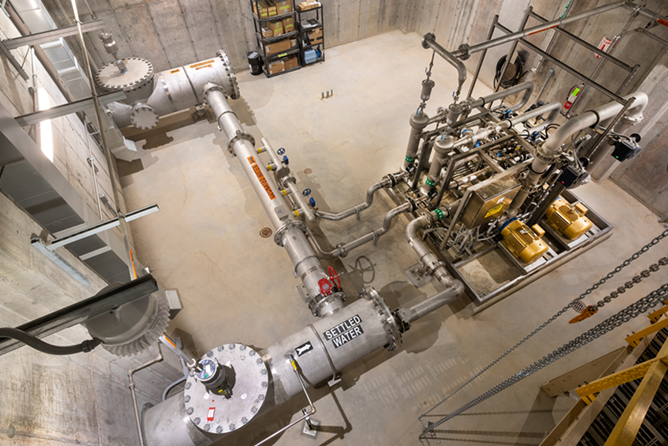
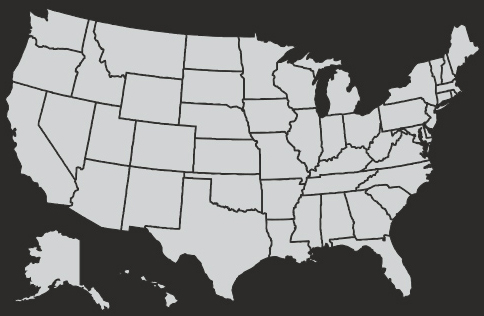
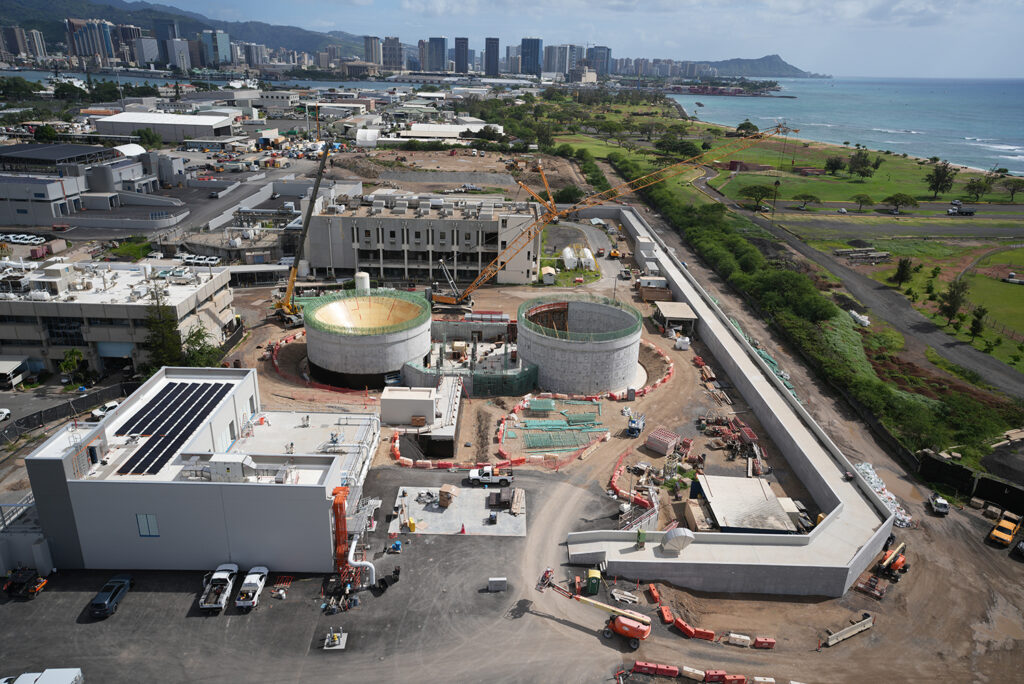
The Synagro In-Vessel Bioconversion Facility Upgrades at the Sand Island Wastewater Treatment Plant in Honolulu, Hawaii, supports the City and County of Honolulu’s long-term biosolids management and sustainability goals. The project replaces aging infrastructure with a modern, high-efficiency system that converts wastewater solids into beneficial reuse products and renewable energy.
Using a collaborative design‑build delivery, the scope includes two 2.35‑million‑gallon anaerobic digesters, sludge storage tanks, a new control building, advanced odor control systems and related tunnel and utility upgrades. Together, these improvements increase treatment capacity, enhance operational efficiency and reduce the environmental impact of the wastewater treatment process.
By modernizing the bioconversion facility, the project transforms organic waste into usable resources while strengthening public health, environmental stewardship and long‑term system resiliency. This investment is a critical component of Honolulu’s efforts to modernize essential infrastructure and prepare for future wastewater demands.
Scheduled for completion in December 2028, the project will deliver reliable, resilient treatment capacity to support the Honolulu community for decades to come.
Learn how Hensel Phelps delivers complex construction solutions across markets by visiting our Projects Page.
“By bringing design, construction, and operations expertise together from the outset, the design-build team transformed a significant unforeseen condition into a successful outcome. Through collaboration, disciplined planning, and creative problem-solving, the team developed a constructible solution with engineered tolerances that enabled the safe and successful execution of this high-stakes work.”
– ERIC PROPST, PROJECT MANAGER | HENSEL PHELPS
Challenge
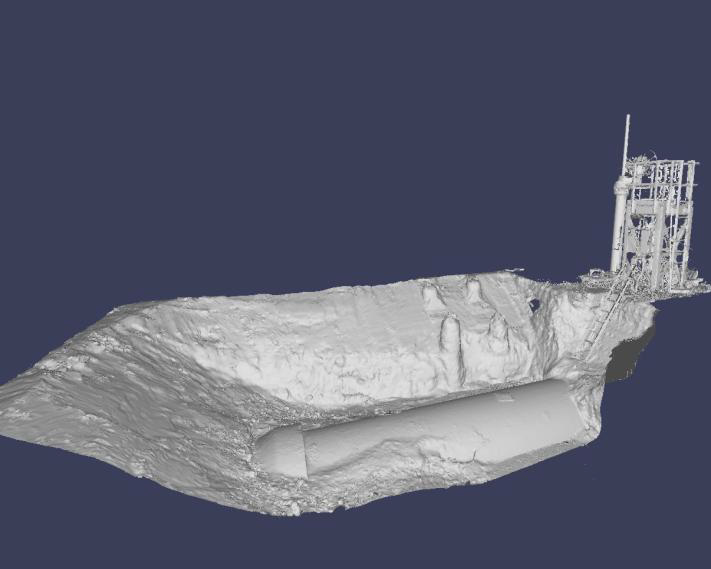
During preconstruction investigations, Hensel Phelps uncovered a critical existing condition that fundamentally altered the project’s construction approach. While the Basis of Design identified a section of the existing 84-inch offshore outfall as abandoned, field verification revealed that the pipe remained active and was conveying over 55 million gallons of treated effluent per day. A portion of this active line extended beneath the footprint of the proposed sludge storage tanks and its presence obstructed the completion of demolition and start of piles.
The discovery created an immediate conflict between critical new infrastructure and an active wastewater conveyance system that could not simply be taken out of service. Traditional approaches—including shutting down the outfall or rerouting facility operations—were deemed impractical due to operational, environmental and regulatory constraints. The project team was faced with the challenge of removing a section of a live 84-inch pipeline while maintaining uninterrupted treatment plant operations and protecting the overall project schedule.
Without intervention, the condition threatened to delay construction by an estimated 232 days and would significantly impact the sequencing of major facility improvements.
Solution
Hensel Phelps immediately assembled a multidisciplinary team of construction, engineering and specialty trade partner experts to evaluate potential solutions. Through a collaborative design-build process, the team rapidly assessed multiple alternatives, including plant outages, facility redesigns, line-stop systems and temporary bypass concepts.
Once the pipeline was identified, the team turned to Virtual Design and Construction (VDC) tools to verify assumptions, gather accurate existing condition data and avoid outage risks. One of the most effective tools deployed was Light Detection and Ranging (LiDAR) scanning—a high precision method that captures millions of data points to create a detailed 3D representation of existing assets.
Through VDC tools, constructability analysis, design efforts and early collaboration, the team utilized a proven hot-tap and bag-stop solution that allowed crews to isolate the active outfall without interrupting plant operations. This selected approach offered the best combination of schedule certainty, constructability and efficiency while maintaining uninterrupted wastewater treatment operations.
The solution required extensive design coordination among specialty engineers, geotechnical consultants, structural designers and construction teams. Design progression included risk assessments, soil stabilization measures, reaction block design, end-cap engineering and detailed constructability reviews to safely execute the work.
Construction crews excavated around and beneath the pipe, installed specialized tapping sleeves, deployed the bag-stop system and ultimately removed a three-foot section of the active outfall while the temporary isolation system continued holding back the facility’s effluent flow.
Results
Through early contractor involvement, rapid decision-making and integrated design-build collaboration, Hensel Phelps transformed a potentially project-altering discovery into a successfully executed engineering solution. The team reduced the projected schedule impact from 232 days to 123 days while maintaining continuous wastewater treatment operations throughout the process.
More importantly, the project avoided operational disruptions to a critical public utility and enabled construction of the new sludge storage facilities to proceed safely and efficiently. The effort demonstrated the value of early risk identification, VDC-enabled planning and collaborative problem-solving in overcoming complex existing conditions within an active operating environment. Lessons learned from the effort reinforced the importance of decision velocity, early stakeholder involvement and advanced modeling tools when addressing high-risk infrastructure challenges.
Related Projects
-
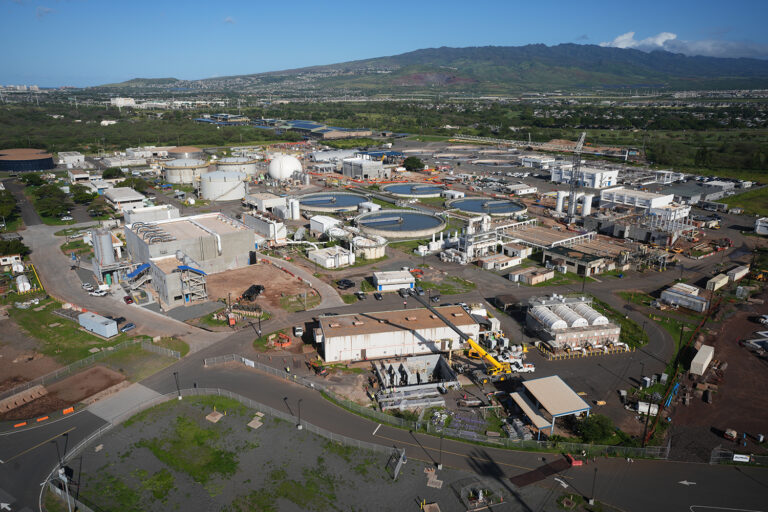
Water + Wastewater project
Honouliuli WWTP Phase 1C – Headworks, HRBC, Solids Process and Miscellaneous Improvements Learn More -
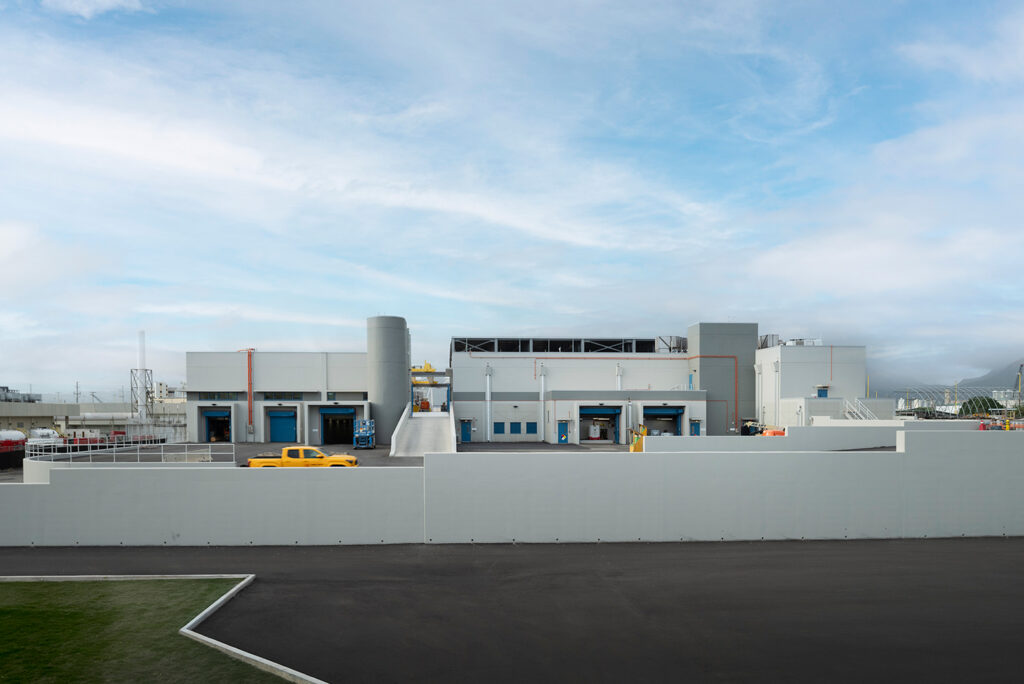
Water + Wastewater project
Sand Island Wastewater Treatment Plant Secondary Treatment Phase 1 Learn More -
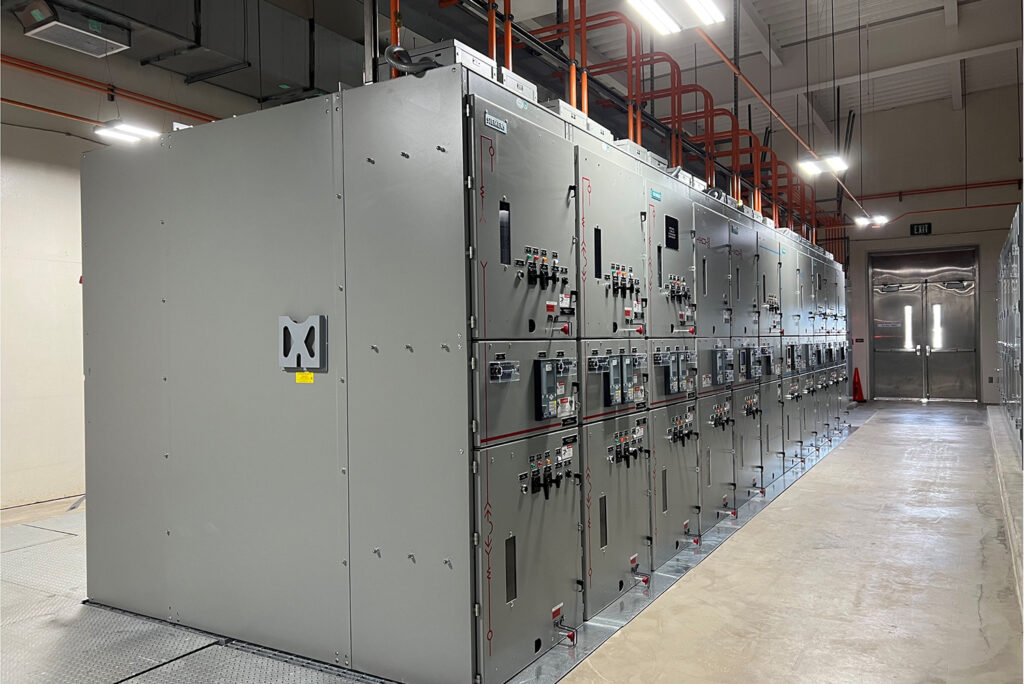
Water + Wastewater project
Kailua Regional Wastewater Treatment Plant Electrical Improvements Learn More -
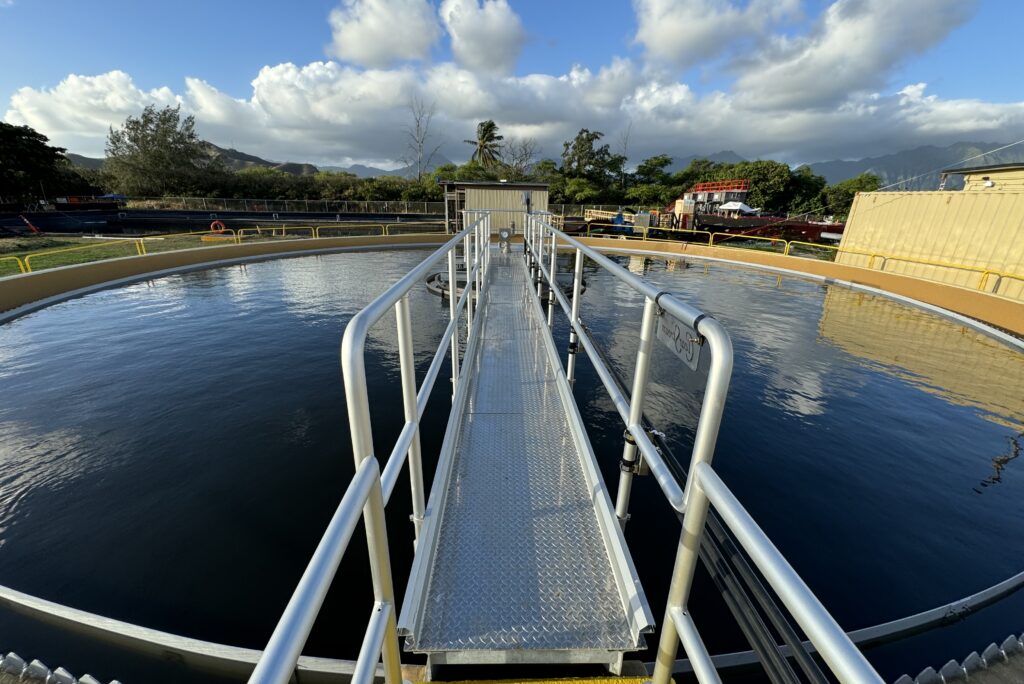
-

Water + Wastewater project
Repair Wastewater Treatment Plant Effluent Pump Station Building 1357 Learn More -