


Halfway through the year, the 2026 construction market outlook is sending mixed signals. Headline spending remains substantial, but the market underneath is becoming more selective. Public infrastructure, power and data capacity continue to progress, while financing-sensitive private development faces greater scrutiny. The result is not a single construction cycle, but a sorting process between projects that must progress forward and projects with the flexibility to wait. The most important question in today’s construction market is no longer simply whether demand exists; it is whether the project serves a need urgent enough to overcome capital, cost, labor and policy constraints.
For owners, navigating this split market requires robust preconstruction risk management strategies to combat construction material cost escalation and skilled labor shortages to actively mitigate uncertainty before it impacts the bottom line.
What Defines Essential Demand Construction?
Construction demand is being shaped less by broad market momentum and more by the purpose each project serves. Projects tied to essential capacity, resilience, national security and operational need are more likely to advance despite market headwinds, while projects with greater timing flexibility face a higher bar before moving forward. Hensel Phelps is seeing this shift in its own work: among competitively bid won projects, “essential demand” categories have grown 5x year over year.
Essential Demand Construction
- Essential capacity: Supports the systems, services and infrastructure required for operations and growth.
- Reliability and resilience: Strengthens continuity, performance and recovery during disruption.
- Regulatory or operational need: Addresses compliance, safety or operational requirements that cannot be deferred.
- Strategic competitiveness: Expands critical capacity in sectors where global competition, supply chain control and speed to win in the market are reshaping investment decisions.
- National security: Supports defense readiness, secure facilities and mission-critical operations.
Discretionary Demand Construction
- Greater dependence on private financing: More exposed to interest rates, lending standards and capital availability.
- More discretionary demand: Valuable, but not immediately required for core operations.
- More timing flexibility: Can be delayed, phased, resized or re-sequenced.
- Uncertain tenant/user demand: Dependent on stronger occupancy, utilization or end-user confidence.
Construction Markets Still Progressing Forward
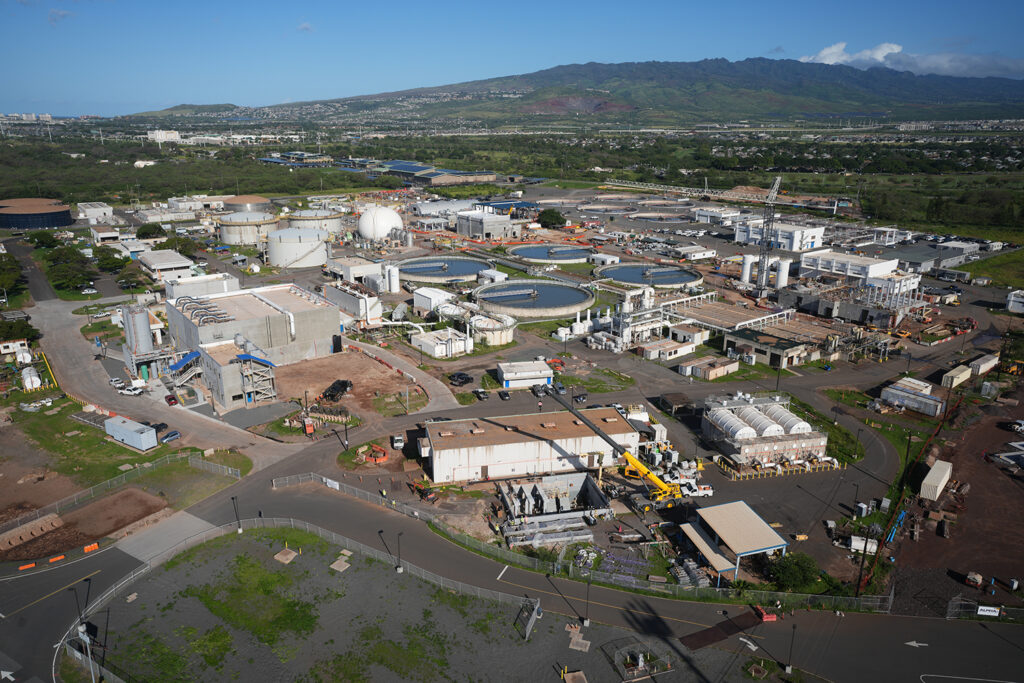
That urgency is most visible in sectors where demand is tied to capacity, resilience and mission-critical need. FMI Corporation forecasts continued strength in water and wastewater, data centers and longer-term power construction driven by data center growth, industrial demand and electrification. In these markets, the need to build is often clearer than the choice to wait.
Case Study: Confidential Data Center and Water/Wastewater Infrastructure Project (WWIP)
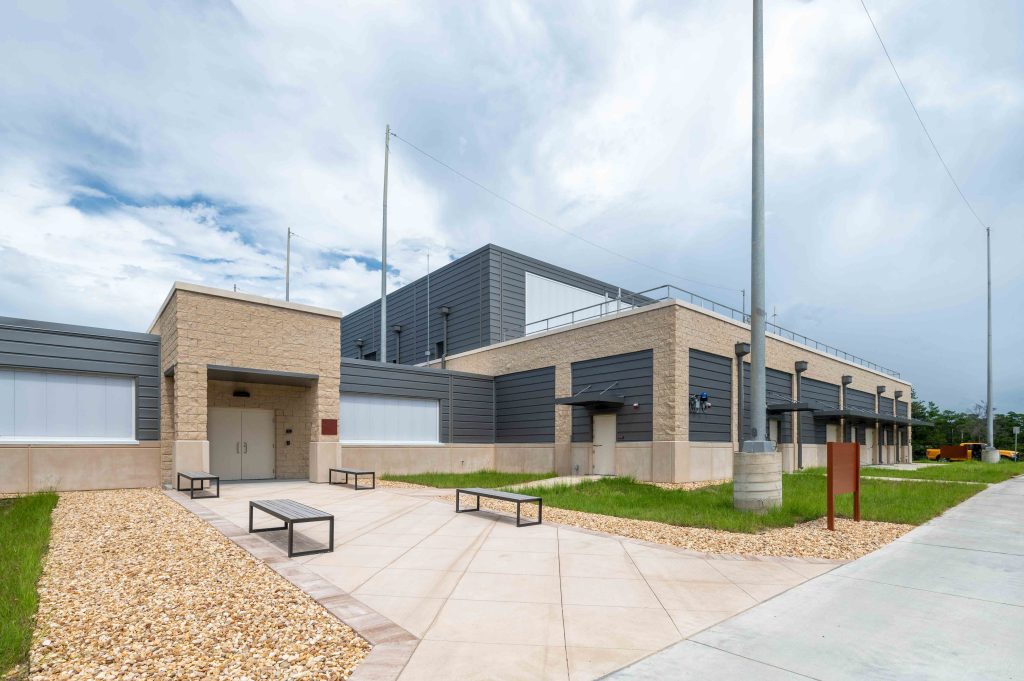
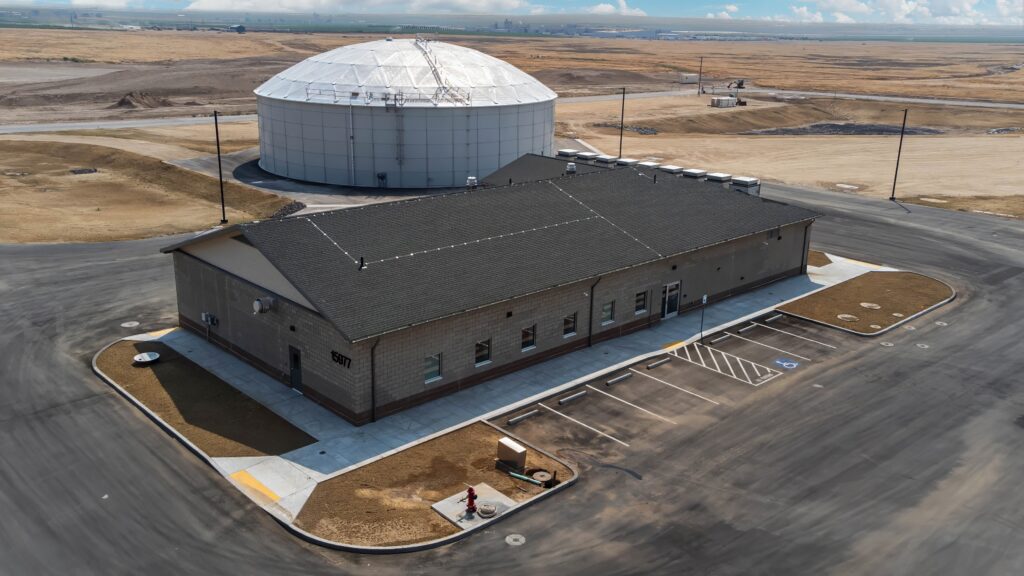
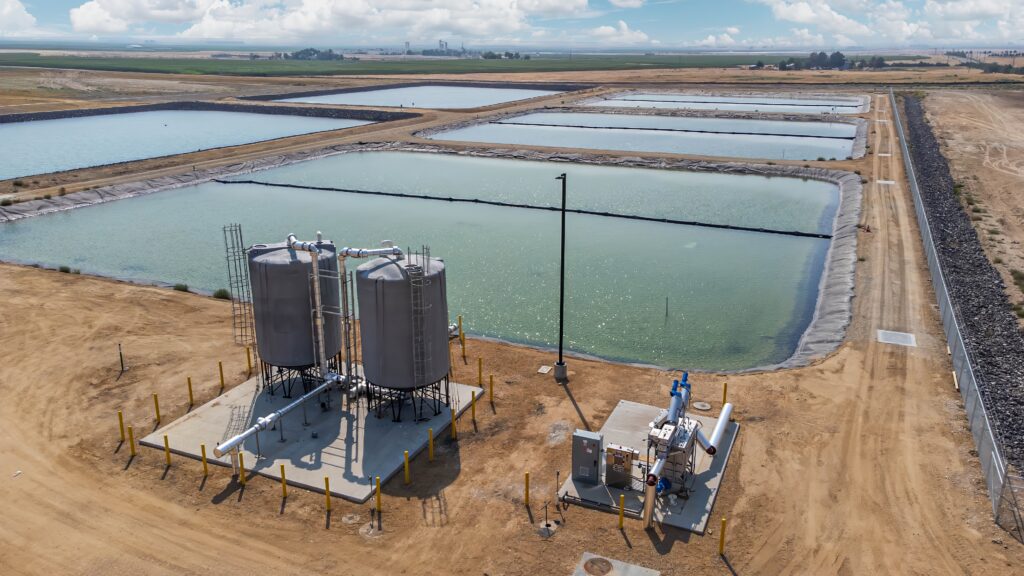
As part of a confidential data center campus build-out, Hensel Phelps constructed a standalone water and wastewater infrastructure project, providing a sustainable and scalable solution for both the data center and the broader community. Delivered using a construction manager at risk (CMAR) approach, the infrastructure project included a water system with an initial capacity of 2 million gallons per day (GPD), supported by two potable water wells, a water operations center, a 3,000-gallon-per-minute booster pump station and a 2-million-gallon potable water storage tank. The extensive network of water supply and distribution pipelines span 43,000 linear feet (8.14 miles), ensuring efficient and reliable water access across the district.
On the wastewater side, the system was built to handle 270 gallons per minute, with a peak monthly flow of 564,000 gallons. Additionally, storage ponds and a land application well support water reuse efforts, reducing environmental impact and promoting long-term sustainability.
Beyond serving the data center, this project plays a crucial role in the campus’s future infrastructure. The WWIP is designed to accommodate future expansion, supporting industrial development and ensuring a resilient and expandable water and wastewater system.
Why Discretionary Demand Projects Are Pausing
Projects are not pausing because they lack value. They are pausing because the bar for certainty is higher. Elevated capital costs are raising hurdle rates for projects dependent on private debt or near-term refinancing. Meanwhile, lenders are putting more pressure on assumptions around demand, valuations, repayment and sponsor strength. For projects with timing flexibility, that means more re-pricing, re-scoping and re-sequencing before capital is committed.
Cost and labor pressures are tightening the same equation. Bureau of Labor Statistics Producer Price Index data shows nonresidential construction inputs are up nearly 10% year over year, while Associated Builders & Contractors (ABC) estimates the industry must attract 349,000 net new workers in 2026 just to meet demand. In megaproject markets, the pressure is sharper as data centers, semiconductor facilities and advanced manufacturing compete for the same specialty trades.
Add policy uncertainty, reflected in the FRED Economic Policy Uncertainty Index, and many owners are looking for stronger cost, schedule and funding confidence before moving forward.
What the 2026 Construction Market Outlook Means for Owners and Developers
The 2026 construction market outlook is not defined by a lack of demand. It is defined by a higher bar for certainty. Projects tied to essential capacity, resilience and mission-critical need to continue to move forward, but they must navigate more complex constraints. Meanwhile, timing-flexible projects face ongoing headwinds from capital costs, construction material cost escalation and uncertainty. For owners, the competitive advantage will go to teams that understand the market early, plan around constraints and make informed decisions before risk shows up in the schedule.
As owners evaluate what this higher-certainty threshold means for their capital plans, the following questions can help pressure-test urgency, clarify assumptions and identify the decisions that can improve confidence before moving forward.
- What are the operational, financial or strategic consequences if this project does not move forward now?
- What assumptions about funding, escalation, labor availability or market demand are we relying on, and how would the project change if those assumptions do not hold?
- Where do we have certainty today, and where do we need better information before committing to scope, schedule or procurement strategy?
Turning Market Challenges into Project Certainty
As demand accelerates across sectors where projects are driven by essential capacity, operational resilience, regulatory requirements, strategic competitiveness and national security, the ability to make informed decisions early has become a critical differentiator. Success increasingly depends on reducing uncertainty before construction begins.
For Hensel Phelps, this market reinforces the value of disciplined preconstruction planning, collaborative project delivery and clear-eyed market intelligence as the definitive blueprints for avoiding schedule delays across complex project environments.
To help owners plan with greater confidence, Hensel Phelps provides integrated planning and preconstruction capabilities that bring greater certainty to planning, procurement and execution:
- Site Selection: Analyze market conditions, labor availability, supply chain dynamics and macroeconomic factors to identify locations that offer strategic advantages, including lower competition, stronger trade partner capacity, prefabrication opportunities and material storage solutions.
- Early Alignment: Bring owners, design partners and trade experts together early to define scope, align expectations and establish a clear execution strategy.
- Planning with Precision: Deliver detailed constructability reviews, milestone-driven schedules and accurate cost modeling to reduce risk and improve predictability.
- Safety from the Start: Integrate proactive hazard identification and site-specific safety planning into every phase of project development.
- Data-Driven Decision Making: Leverage real-time estimating tools, forecasting dashboards and performance metrics to support informed, agile decision-making.
- Compliance Support: Engage subject matter experts to anticipate and coordinate around evolving code requirements, quality standards and regulatory obligations.
By combining market intelligence with rigorous planning and execution expertise, Hensel Phelps helps clients move critical projects forward with greater confidence, certainty and speed.
When projects can’t wait, planning can’t either. Reach out to Hensel Phelps to learn how our integrated planning, preconstruction and delivery expertise can help accelerate decision-making, reduce uncertainty and keep critical projects moving forward.


