


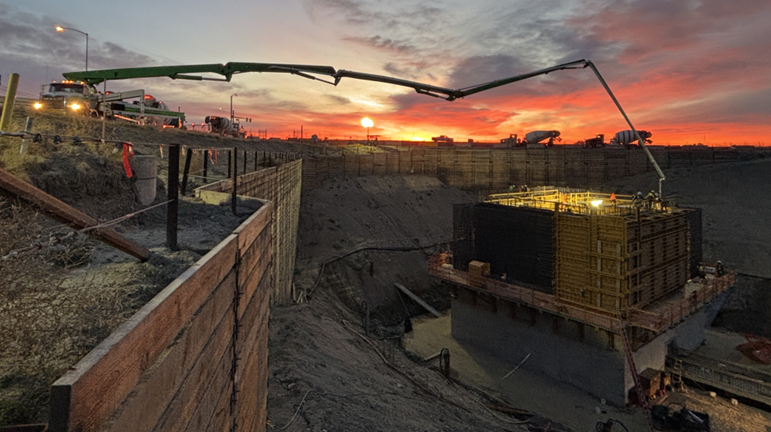
For water and wastewater owners, moving from one phase of a complex infrastructure project to the next requires confidence in the team, the process and the path forward. After Hensel Phelps completed the $13 million Hazeltine Pump Station – Heavy Civil Project in June 2026, Denver Water selected the team to continue into the $21 million Hazeltine Pump Station – Buildings, Mechanical and Electrical Project without rebidding the work.
That continuity allows Denver Water to build on the knowledge and collaboration established during the first phase while adapting the delivery approach to meet the needs of the next. Phase 1 used a traditional design-bid-build delivery method, while Phase 2 uses a negotiated lump-sum preconstruction contract with progressive amendments aligned with design deliverables.
The progression of work at Hazeltine reflects a broader lesson for water and wastewater owners managing complex capital programs: strong partnerships can create continuity without limiting flexibility. As project needs change, an experienced project team can carry lessons forward, adjust its approach and help owners address challenges earlier.
Building the Infrastructure Behind Long-Term Water Storage/Conveyance
The recently completed Hazeltine Pump Station – Heavy Civil Project established the foundation for a critical component of Denver Water’s North Reservoir Complex. The project included construction of a 60-foot-deep reinforced concrete wet well, requiring a 70-foot-deep excavation, extensive dewatering and the self-performed placement of 3,623 cubic yards of concrete.
The technical complexity of the work was significant, but the larger purpose extends well beyond the pump station itself. Hazeltine is part of Denver Water’s broader Downstream Reservoir Water Storage Program, which will ultimately provide approximately 30,000 acre-feet of water storage capacity across nine reservoirs along the South Platte River corridor.
Once operational, the facility will help Denver Water move water throughout the reservoir system, maximize available storage and strengthen long-term drought resiliency for the Front Range. For utilities planning infrastructure that will serve communities for decades, projects like Hazeltine demonstrate how individual improvements can support a much larger strategy for water security and system reliability.
Carrying Project Knowledge Into the Next Phase
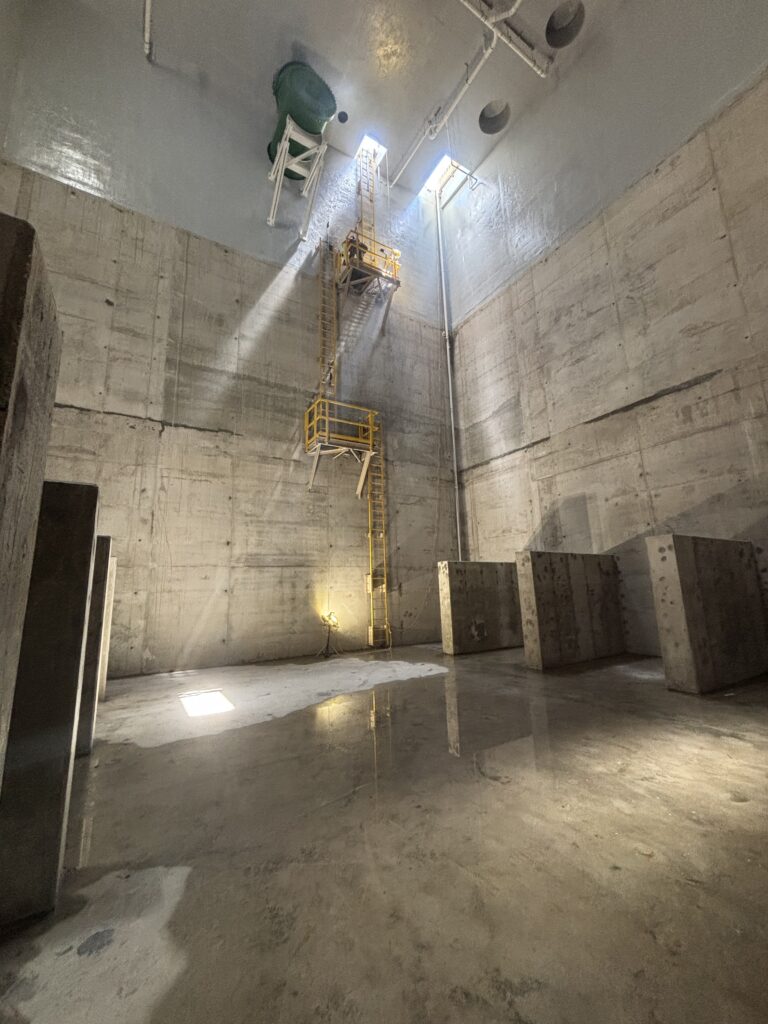
With the heavy civil work complete, the next phase turns the infrastructure already in place into an operational pump station.
The Hazeltine Pump Station – Buildings, Mechanical and Electrical Project includes construction of the pump station building, electrical building, medium-voltage electrical systems, instrumentation and controls, process piping, pumps, mechanical systems and supporting infrastructure.
Because Hensel Phelps remained involved from one phase to the next, the project team can carry forward its understanding of the site, existing conditions, project constraints and Denver Water’s priorities. That continuity also creates opportunities to address schedule and procurement challenges earlier.
For example, early procurement efforts are already underway for long-lead electrical equipment. Identifying those needs during preconstruction gives Denver Water and the project team more time to manage procurement risk and protect critical schedule milestones before construction reaches the point where those materials are needed. This type of early coordination becomes increasingly important as water and wastewater projects contend with specialized equipment, constrained sites and infrastructure that must remain operational throughout construction.
Building a Partnership Across a Water System
The relationship between Hensel Phelps and Denver Water extends beyond Hazeltine. Hensel Phelps is also the builder on Denver Water’s design-build Reservoir Aeration Project with Carollo Engineers and was recently awarded the $63 million Marston Water Treatment Plant Disinfection Improvements Project. Together, these projects touch different parts of Denver Water’s infrastructure and require different technical solutions and delivery approaches.
That variety gives project teams an opportunity to develop a broader understanding of an owner’s standards, priorities and long-term infrastructure goals. Knowledge gained on one project can help inform conversations on the next, while each project can still be approached according to its specific risks and requirements. For owners responsible for large capital programs, that familiarity can support faster alignment, more informed decision-making and greater continuity across individual projects.
Supporting Colorado’s Water Future
Water utilities operators face the challenge of maintaining today’s systems while preparing for population growth, drought, aging infrastructure and changing demands on water supplies. Meeting those challenges requires projects that work together as part of a larger system.
Through its growing partnership with Denver Water, Hensel Phelps is helping deliver infrastructure designed to strengthen storage, treatment and reliability across the Front Range. The work also demonstrates how long-term collaboration can help owners carry knowledge forward from project to project while selecting the delivery strategy that best fits each challenge.
With nearly nine decades of experience building along Colorado’s Front Range, Hensel Phelps continues to work alongside water and wastewater owners to plan and deliver complex infrastructure that supports reliable water systems for the communities that depend on them. Learn more and connect with the Hensel Phelps team to discuss how early collaboration, flexible delivery strategies and lessons learned in the field can help move water programs forward.


