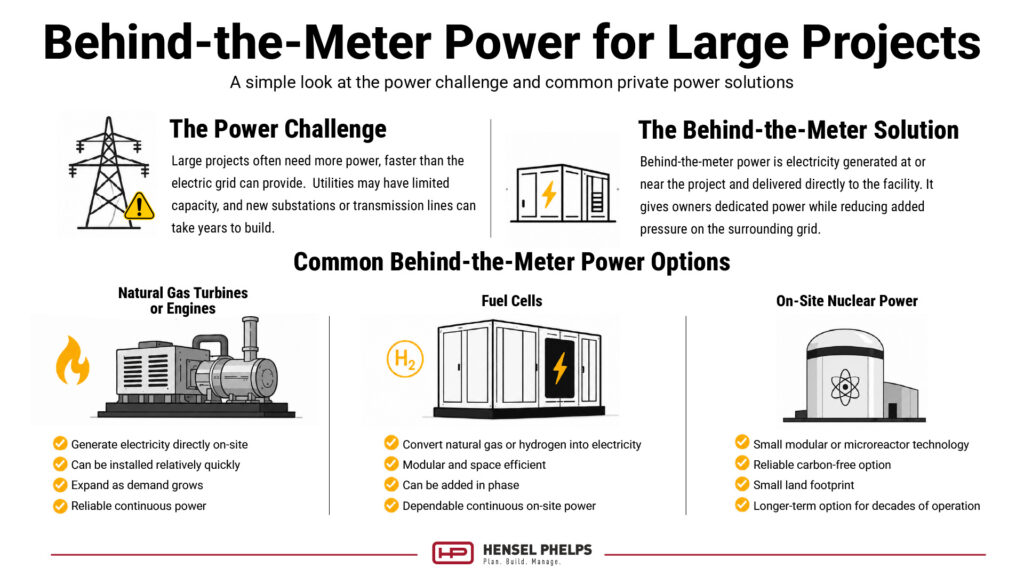


For decades, project teams planned around the assumption that utility power would be available when a facility was ready to operate. Today, that assumption is increasingly uncertain.
Rapid load growth, limited grid capacity, extended interconnection timelines and more frequent disruptions are changing how owners approach energy infrastructure. For some, insufficient power threatens the schedule for bringing new facilities or capacity online. For others, the concern is maintaining essential operations when utility service becomes unreliable or unavailable.
Energy resilience is therefore no longer limited to providing emergency power during an outage. It is about giving owners greater control over when power becomes available, how it is generated and managed and which operations can continue when the grid cannot fully support a project’s needs.
Technologies such as fuel cells, renewable generation, battery storage, microgrids and advanced controls are creating new options across markets. But selecting a technology is only one part of the solution. Successful projects begin by defining the owner’s mission and integrating energy strategy with design, utility coordination, procurement, construction, commissioning and long-term operations.
What Does Energy Resilience Mean for Facility Owners?
Resilience means different things for different facilities. For an advanced technology infrastructure project, it may mean securing enough power to bring new computing capacity online when public utilities cannot meet the required schedule. For a civic building, it may mean maintaining emergency response, public safety coordination and essential municipal services during an extended outage.
These differences make it important to begin with the mission rather than a preferred technology. Owners and project teams should first determine:
- How much power is required—and when?
- Which loads are essential?
- How quickly must an alternative source respond?
- How long must critical operations continue?
- How will demand change as the facility grows?
- What infrastructure and fuel sources are available?
- How should reliability, sustainability, schedule and cost be balanced?
The answers may lead to a microgrid, behind-the-meter generation, battery storage, renewable energy, utility improvements or a combination of solutions. More importantly, they establish the performance requirements the complete energy system must meet.
Behind-the-Meter Power Solutions that Address Grid Capacity Constraints
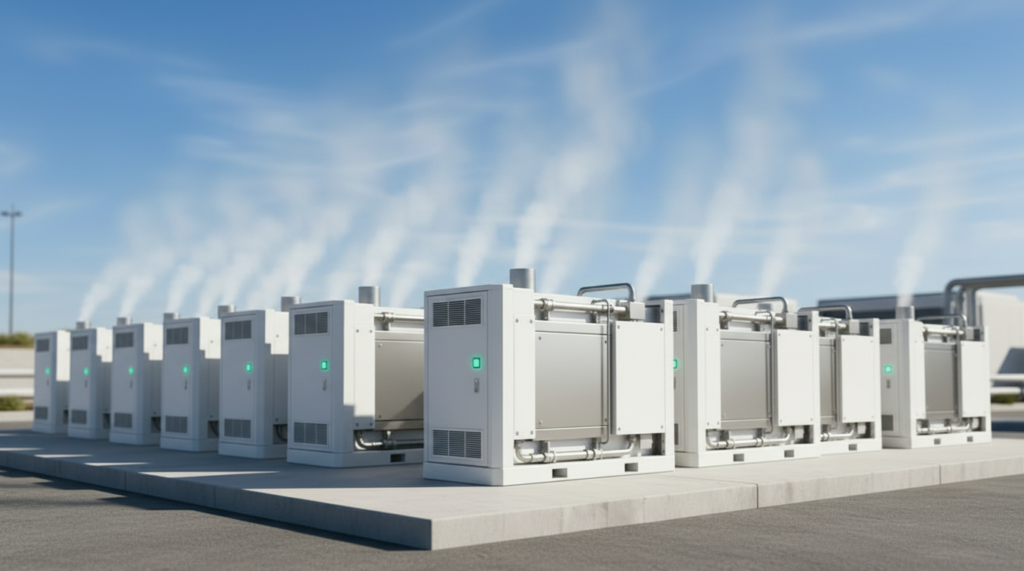
On a Hensel Phelps confidential advanced technology infrastructure expansion program, utility power availability shifted beyond the client’s required capacity dates. The owner responded by developing nearly 100 megawatts (MW) of behind-the-meter generation using modular solid-oxide fuel cells, creating a scalable source of on-site power that reduced dependence on the timing of public-grid expansion.
The shift affected far more than the electrical system. Hensel Phelps coordinated the owner, technology provider, utilities, designers and trade partners to integrate the revised power strategy with site infrastructure, equipment procurement, phased construction and commissioning. By organizing the work around defined zones and handoff milestones, fuel-cell installation could advance as areas became available.
The project demonstrates how early planning, dedicated generation and integrated delivery can create a viable path to energization when conventional utility infrastructure cannot meet a project’s schedule.
How Microgrids Maintain Critical Operations During Grid Outages
While some owners need resilient energy systems to support growth, others need them to preserve critical operations during an outage.
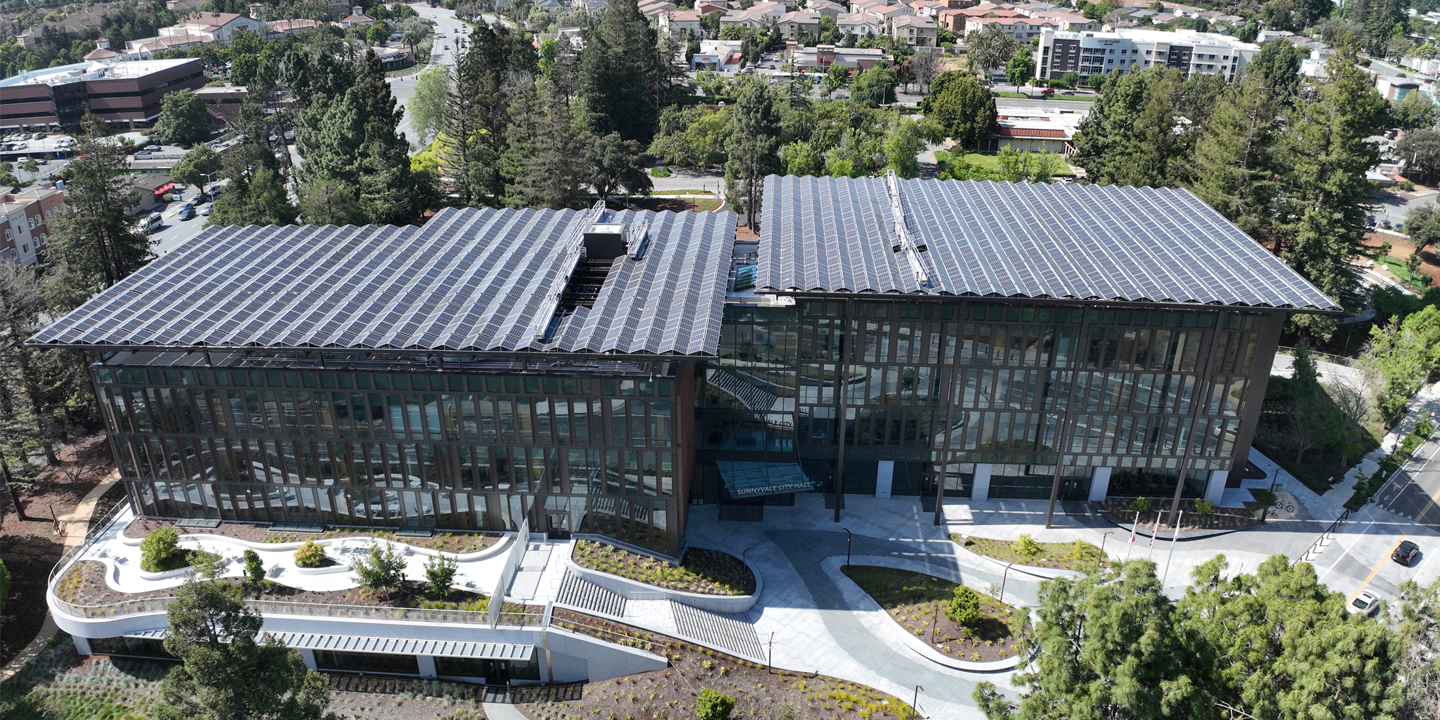
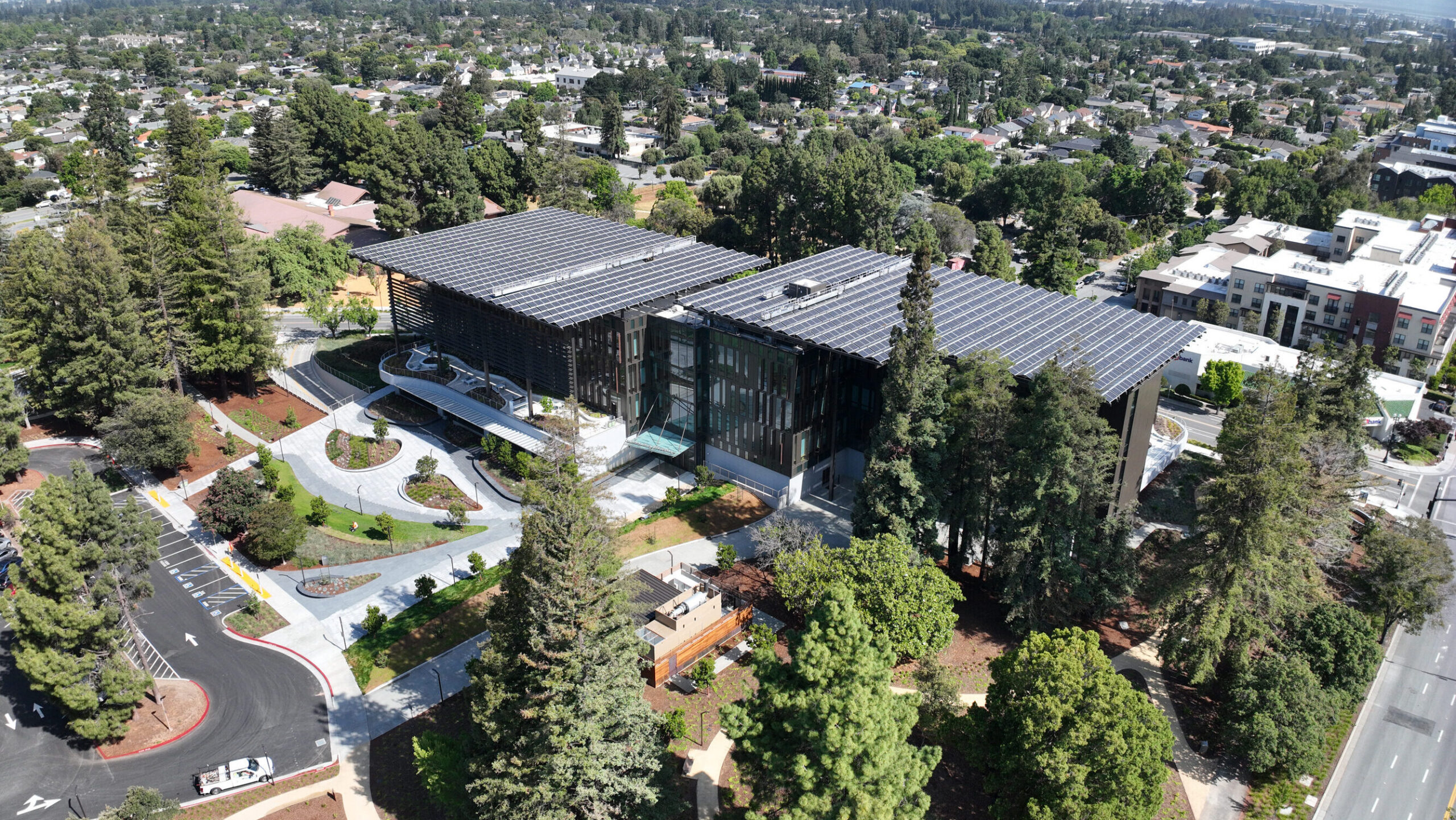
At Sunnyvale City Hall, a microgrid integrates utility power, a 680-kilowatt (kW) photovoltaic array, a 250-kW-per-hour (kWh) battery energy storage system and emergency generation. The automated system allows the City of Sunnyvale to use on-site renewable energy during normal operations while supporting essential municipal services when grid power is unavailable.
Hensel Phelps worked with the City, PG&E and project stakeholders to coordinate interconnection requirements, inspections, temporary power and commissioning around an occupied civic campus. The team also helped City representatives understand the microgrid’s operating modes, supported systems and response during an outage.
The completed system strengthens the facility’s operational resilience while contributing to its net zero energy performance and LEED Platinum certification. It demonstrates how integrated energy resources can help public facilities maintain the services their communities depend on.
Common Challenges of Resilient Energy Infrastructure
The fuel-cell system and Sunnyvale’s solar-plus-storage microgrid respond to different needs, but the projects reveal several common lessons.
Engage utilities early
On-site generation does not eliminate the utility’s role. Interconnection, service capacity, metering, disconnects, testing and operating agreements can all influence design and schedule. Early and continued engagement helps the team identify requirements before they become barriers to commissioning or energization.
Evaluate the complete infrastructure impact
Alternative energy systems extend beyond electrical equipment. They may affect site configuration, foundations, underground infrastructure, fuel supply, water service, fire protection, controls, equipment access and maintenance. Evaluating these impacts early provides a more complete understanding of each option’s scope, cost and schedule.
Connect procurement to the energization plan
Switchgear, transformers, controls and generation equipment frequently have long or uncertain lead times. Procurement planning should identify technical requirements, decision deadlines, factory testing, delivery constraints and installation sequences—particularly when the system will be energized in phases.
Plan commissioning from the beginning
Resilient power infrastructure is a system of systems. Individual components may operate correctly while the complete system fails to transition as intended. Commissioning must validate how utility power, on-site generation, storage, emergency systems and controls perform together under realistic operating conditions.
Prepare the owner to operate the system
Facilities teams need to understand which loads are supported, how the system responds to changing conditions, how failures are managed and what maintenance is required. Their involvement in design reviews, controls development, commissioning and training helps ensure the finished system reflects how the facility will actually operate.
Developing an Energy Resilience Strategy
There is no universal technology for energy resilience. The appropriate strategy depends on the owner’s mission, load profile, site conditions, schedule, available infrastructure and tolerance for operational risk.
The advanced technology infrastructure project and Sunnyvale Civic Center required different solutions because they faced different challenges. One needed a path to growth when utility infrastructure could not meet the required schedule. The other needed to sustain critical public services when grid power was disrupted.
In both cases, greater resilience came from treating energy as an early project-development decision and coordinating technology, infrastructure, construction and operations as one strategy. As grid constraints and operational demands intensify, that integrated approach can help owners move projects forward with greater certainty and maintain the capacity and services their businesses and communities depend on.