

About the Project
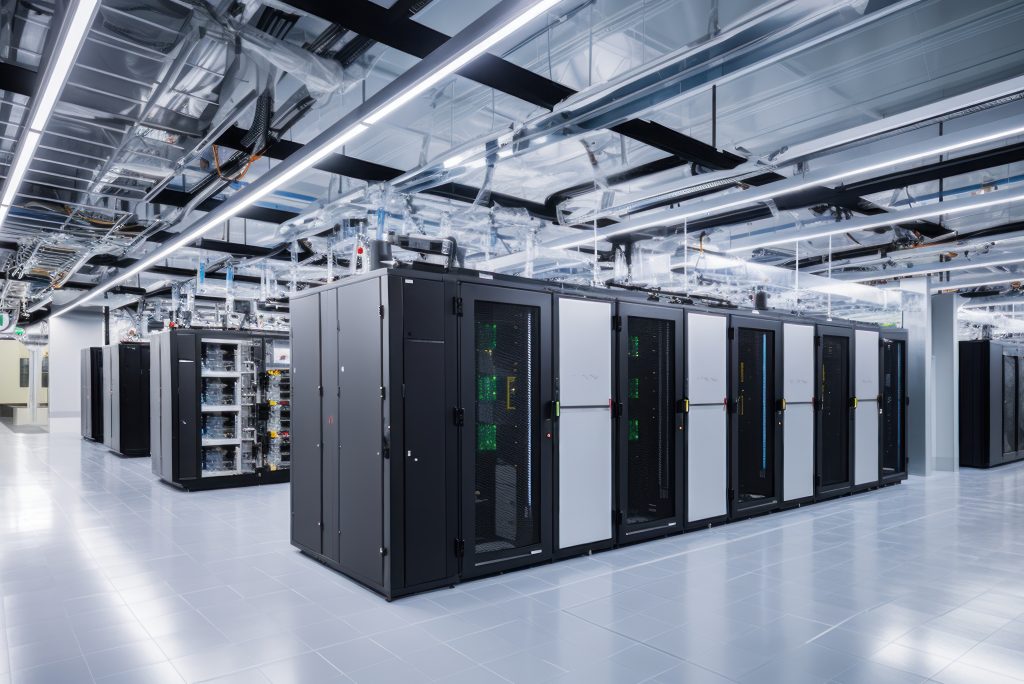
A confidential client is expanding an existing advanced technology infrastructure campus with new capacity-driven infrastructure designed to support production systems and advanced-compute workloads. Delivered in phases, the program provides scalable capacity while maintaining operational continuity across the active campus during ongoing growth and retrofit activities.
The new facilities use a standardized, single-story design with large clear spans that support flexible equipment layouts and repeatable construction. Defined fault domains, modular IT rows and consistent rack densities allow capacity to be added predictably as operational needs evolve.
High-availability electrical systems provide standardized power and direct distribution to equipment racks, while air-assisted systems use direct evaporative cooling to improve efficiency and reduce mechanical complexity. The program also incorporates behind-the-meter power through modular on-site generation. Together, these features support accelerated delivery without compromising performance, reliability or operational requirements.
Learn how Hensel Phelps delivers complex construction solutions across markets by visiting our Projects Page
Challenge

Power availability emerged as the defining constraint on the program’s ability to deliver new capacity on schedule. The original design relied on medium-voltage utility power from owner substations, but utility availability shifted beyond the client’s required capacity dates, leaving the planned delivery schedule without a viable path to energization.
Waiting for traditional utility infrastructure could have delayed new capacity by months or years. The owner needed a reliable on-site power generation solution that could be deployed quickly, scaled with the program and tested against the highly variable loads associated with advanced-compute workloads.
Changing the power source also changed the basis of design. The new approach required redesigned electrical yards, revised civil infrastructure, new natural gas and water interfaces and substantial changes to foundations, underground utilities, feeder routing, equipment procurement and commissioning. These changes had to be integrated while maintaining the accelerated schedule.
Solution
To protect the required capacity dates, the owner pivoted from waiting for utility power to developing a dedicated source of electricity on site. The selected approach uses behind-the-meter infrastructure to provide on-site power generation through a 480-volt, low-voltage fuel-cell microgrid composed of 36 modular solid oxide fuel-cell units, providing nearly 100 megawatts (MW) of installed generation. The fuel cells convert natural gas into electricity through an electrochemical process without combustion. By generating power on site, the owner created a viable path to energization while reducing dependence on constrained public-grid capacity.
Hensel Phelps led an integrated design-management effort that brought together the owner, fuel-cell provider, utility providers, design consultants, trade partners and installation teams. The team redesigned the electrical yards and coordinated the related civil work, foundations, underground utilities and feeder routes. It also managed temporary and permanent natural gas infrastructure needed for commissioning and long-term operation, along with the water and utility interfaces introduced by the revised design.
To support the client’s accelerated capacity objectives, Hensel Phelps organized electrical-yard construction into zones aligned with the modular fuel-cell units. Dedicated handoff milestones allowed the fuel-cell installation team to begin work in completed zones rather than waiting for the entire yard to be finished.
Long-lead switchgear, transformers, power-distribution systems and related electrical equipment were incorporated directly into the critical-path schedule. Hensel Phelps then sequenced yard construction, equipment installation, fuel-cell deployment, commissioning and owner-provisioning activities as one coordinated plan, supporting phased energization and controlled power releases.

Results

The behind-the-meter strategy created a viable path to power that did not depend on the public grid expanding within the program’s original timeline. Nearly 100 MW of modular on-site generation gives the owner a dedicated source of electricity while making grid availability less of a constraint on future capacity growth.
Hensel Phelps’ integrated approach turned a fundamental design change into a coordinated delivery plan with defined zones, handoffs, procurement milestones and energization sequences. This reduced uncertainty around the power schedule and allowed fuel-cell installation and commissioning activities to advance in phases.
The first-of-kind architecture will also provide operating data the client can use to evaluate how fuel cells respond to variable advanced-compute demand and whether the model can support future deployments. As power demand continues to outpace utility expansion, the program demonstrates how early planning, dedicated generation and integrated delivery can give owners greater control over when capacity comes online.