

A wastewater treatment plant (WWTP) is often described in linear terms, moving water from dirty to clean. Realistically, the process is more layered: liquid and solids streams run in parallel, energy is recovered and reused and support systems operate continuously across every stage. Understanding how those systems work together is increasingly important as utilities look to expand capacity, improve efficiency and maximize existing infrastructure.
This article provides an overview of how those interconnected systems move wastewater through the treatment process. Want to dig deeper? Download the white paper for a more detailed look at the systems and considerations behind wastewater treatment.
The seven main stages below reflect that complexity.
- Preliminary Treatment
- Primary Treatment
- Secondary Treatment
- Final Effluent/Tertiary Treatment
- Solids Processing
- Biogas Treatment and Energy Recovery
- Plantwide Support Systems
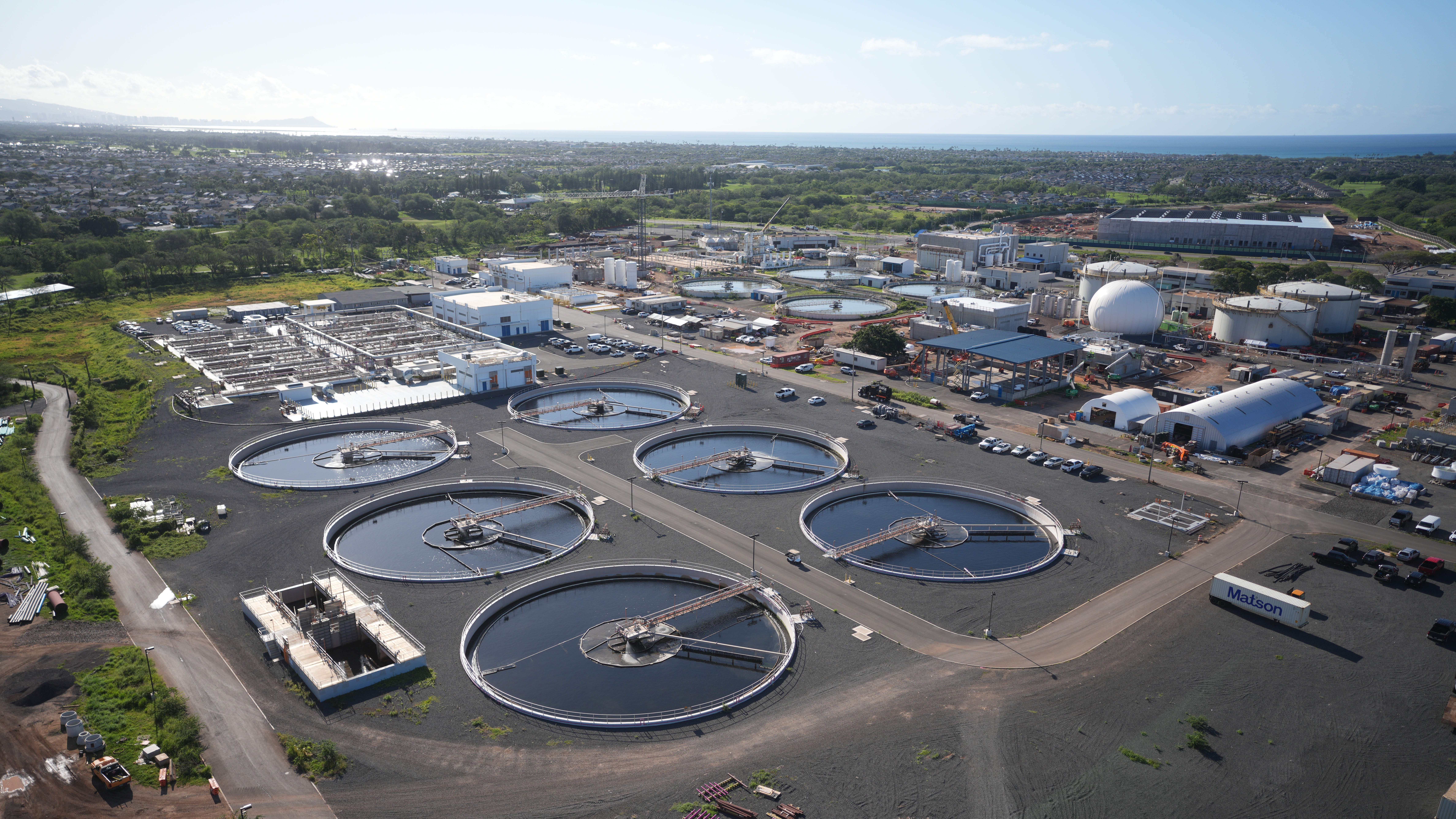
As Hensel Phelps constructs wastewater projects throughout the nation, project teams carefully study the complexities of each treatment plant to fully understand its operations and identify ways to optimize performance. The wastewater treatment process provides numerous opportunities for innovation, from improving operational efficiency to enhancing treatment performance. Hensel Phelps’ Honouliuli Wastewater Treatment Plant WWTP project in Hawaii demonstrates several of these solutions in practice.
Liquid Treatment Train
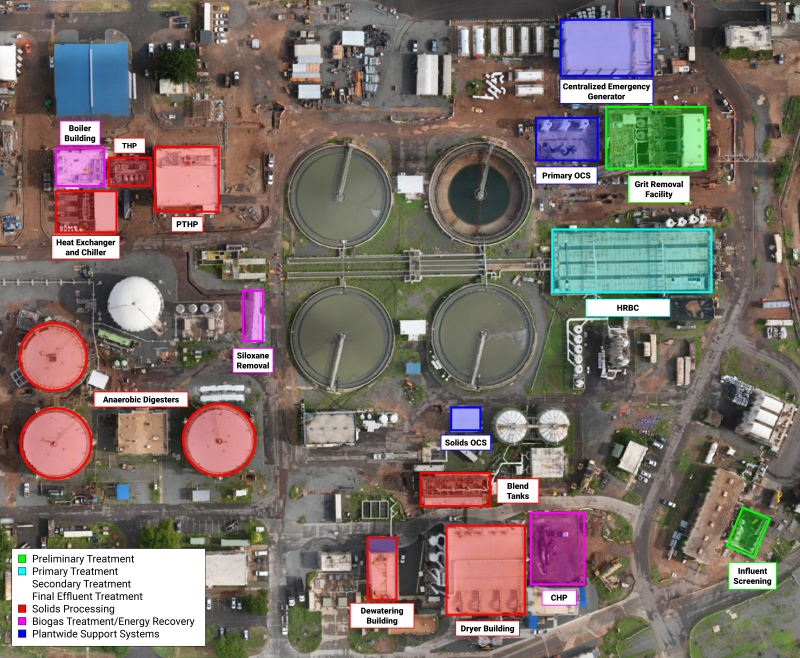
The liquid treatment train progressively removes debris, solids, organic material and pathogens as wastewater moves through the facility. Each stage prepares the flow for the next, making performance upstream critical to downstream efficiency.
Stage 1: Preliminary Treatment
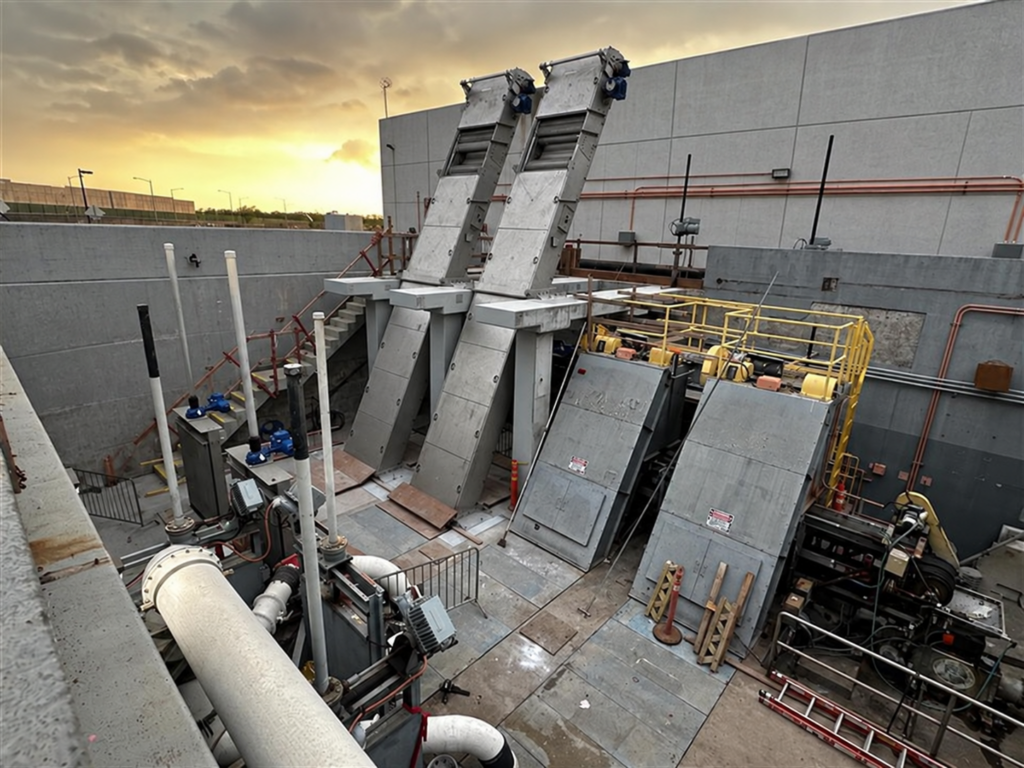
Wastewater, or influent, first enters the plant at the headworks, where screening and grit removal protect downstream equipment.
At the influent screening facility, screens capture rags, wipes, plastics and other debris that could clog or damage pumps and piping. An automated rake system cleans the screens and removes the captured material.
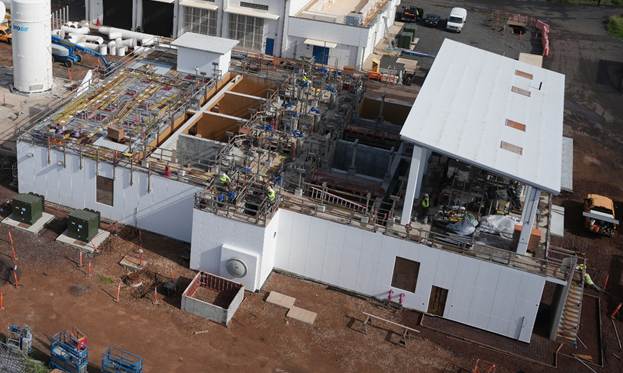
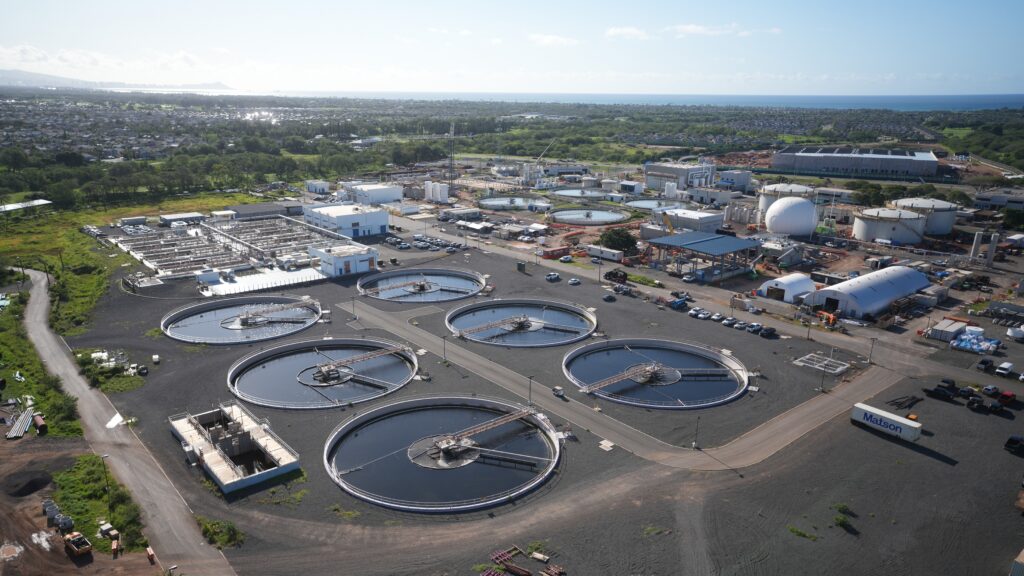
Honouliuli’s grit removal facility then removes sand, gravel and other small, heavy particles. Prefabricated vortex-shaped headcells create a spiraling current that keeps lighter organic material suspended while heavier grit settles for removal. Compared with conventional grit systems, the technology captures a broader range of particle sizes in a smaller footprint, with shorter detention times and lower energy requirements.
Stage 2: Primary Treatment
With grit removed, wastewater moves to primary treatment, where flow slows and gravity separates solids from the liquid stream. Heavier material settles as primary sludge while lighter material rises to the surface for removal. By capturing solids early, primary treatment reduces the load placed on downstream biological systems.
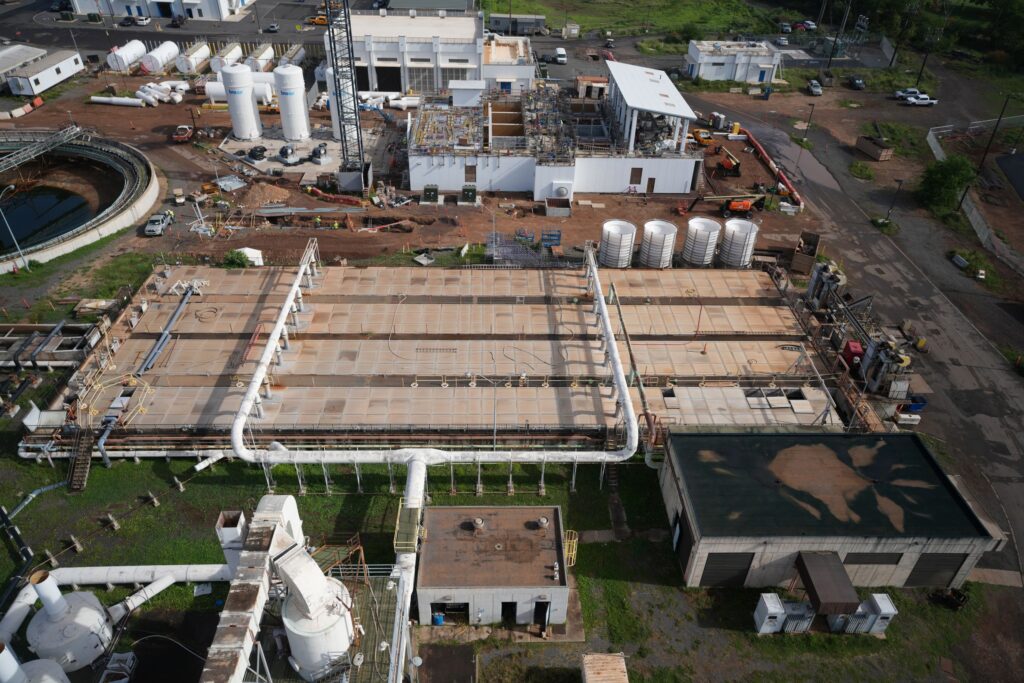
Traditionally, gravity does much of the work as solids settle as primary sludge and lighter materials are skimmed from the surface. At Honouliuli, primary clarification is being enhanced with high-rate biological contactor (HRBC) tanks and dissolved air flotation (DAF) tanks. The HRBC uses microorganisms to capture dissolved organic material while DAF uses fine air bubbles to separate and concentrate suspended solids. A portion of the resulting surface waste activated sludge (SWAS) is recycled into the incoming wastewater to support the HRBC, while the remaining waste activated sludge (WAS) moves to solids processing.
Together, these systems capture more organic material earlier, reducing demand on secondary treatment and sending more biomass to digestion where it can contribute to biogas production.
Stage 3: Secondary Treatment
Secondary treatment uses biological processes to remove dissolved and suspended organic material that remains after primary treatment. Microorganisms consume this material and convert it into biological solids that can then be separated from the treated water.
Depending on the facility, microorganisms may remain suspended in the wastewater through an activated sludge process or attach to fixed media. Secondary treatment typically removes the majority of remaining biochemical oxygen demand (BOD) and suspended solids before the water moves to final treatment.
Stage 4: Final Effluent Treatment
Before treated water can be discharged or reused, final effluent treatment removes remaining solids, pathogens and other constituents. Filtration captures fine suspended material while disinfection, commonly through ultraviolet light or chlorination, inactivates harmful pathogens. This final polishing step helps utilities consistently meet regulatory requirements while preparing treated water for its intended discharge or reuse application.
Solids Treatment and Resource Recovery
As solids are removed from the liquid stream, they enter a separate treatment path focused on stabilization, volume reduction and resource recovery. At facilities like Honouliuli, that process can also create opportunities to recover energy and produce beneficial-use biosolids.
Stage 5: Solids Processing
While the liquid treatment stream moves toward final effluent, solids collected throughout the process follow a separate treatment path. These solids must be stabilized, reduced in volume and prepared for reuse or disposal.
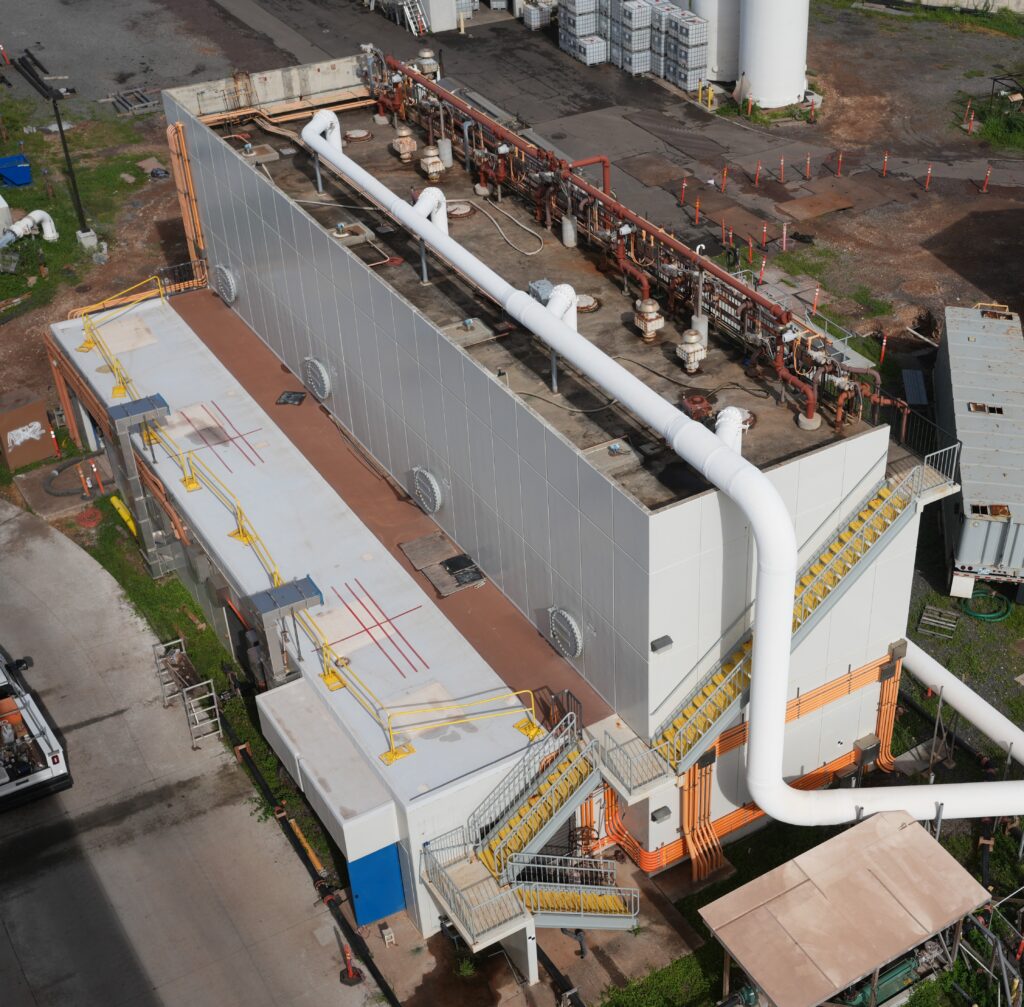
At Honouliuli, that process also creates an opportunity to recover additional value from the waste stream. The blend tank facility combines solids generated onsite with sludge received from neighboring plants that do not have their own solids-processing systems, making Honouliuli a regional collection and processing point.
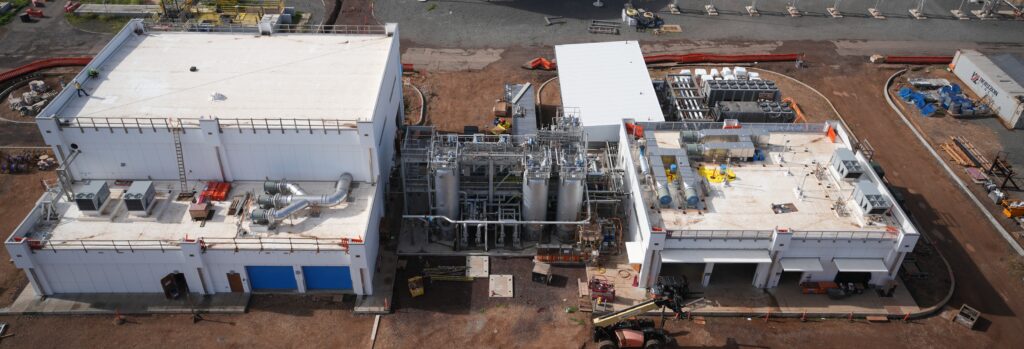
The combined material then moves through additional screening and dewatering in preparation for Cambi’s Thermal Hydrolysis Process (THP). THP uses heat and pressure to break down the sludge before anaerobic digestion, improving digestibility, increasing biogas production and allowing the digesters to accommodate higher solids loading. Honouliuli is the first facility in Hawaii to use THP and among the first dozen built in the nation.
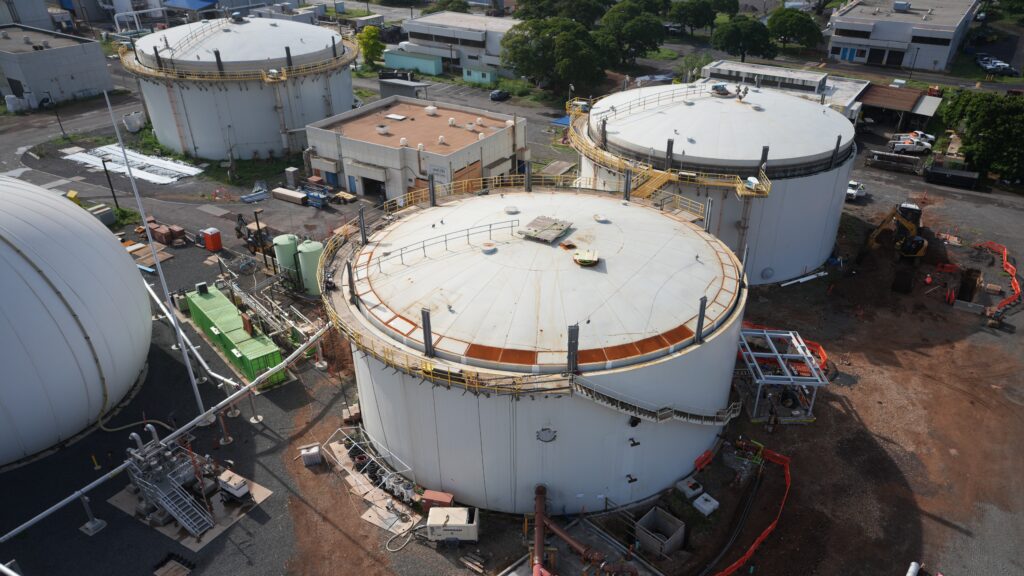
After THP, the sludge is cooled before entering anaerobic digesters, where microorganisms continue breaking down organic material and produce biogas. The remaining material is then dewatered and sent to the dryer facility, where it can be converted into a Class A biosolid for beneficial use.
Stage 6: Biogas Treatment and Energy Recovery
Biogas generated during anaerobic digestion must be cleaned before it can be used as fuel. At Honouliuli, hydrogen sulfide and siloxanes are removed before the gas reaches the combined heat and power (CHP) building. There, a blend of biogas and natural gas generates electricity while recovered heat supports the dryer facility. For utilities, recovering energy from the treatment process can help offset purchased energy and improve the facility’s long-term operational efficiency.
This integration illustrates an important shift in wastewater treatment: solids processing can become a resource-recovery system rather than simply a waste-management function.
Supporting Reliable Plant Operations
Behind both the liquid and solids treatment processes are systems that help keep the entire facility operating safely, reliably and continuously. These systems support everything from power resiliency and odor control to instrumentation and process control.
Stage 7: Plantwide Support Systems
Treatment depends on plantwide systems that operate continuously behind the scenes, including instrumentation and controls, chemical feed, compressed air, water distribution, backup power and odor control. Their reliability affects every stage of the plant, making them critical to maintaining continuous operations.
At Honouliuli, the centralized emergency generator facility provides backup power to maintain critical treatment operations during grid outages. Because wastewater continues entering the facility regardless of power availability, this redundancy is essential to operational reliability and environmental compliance.
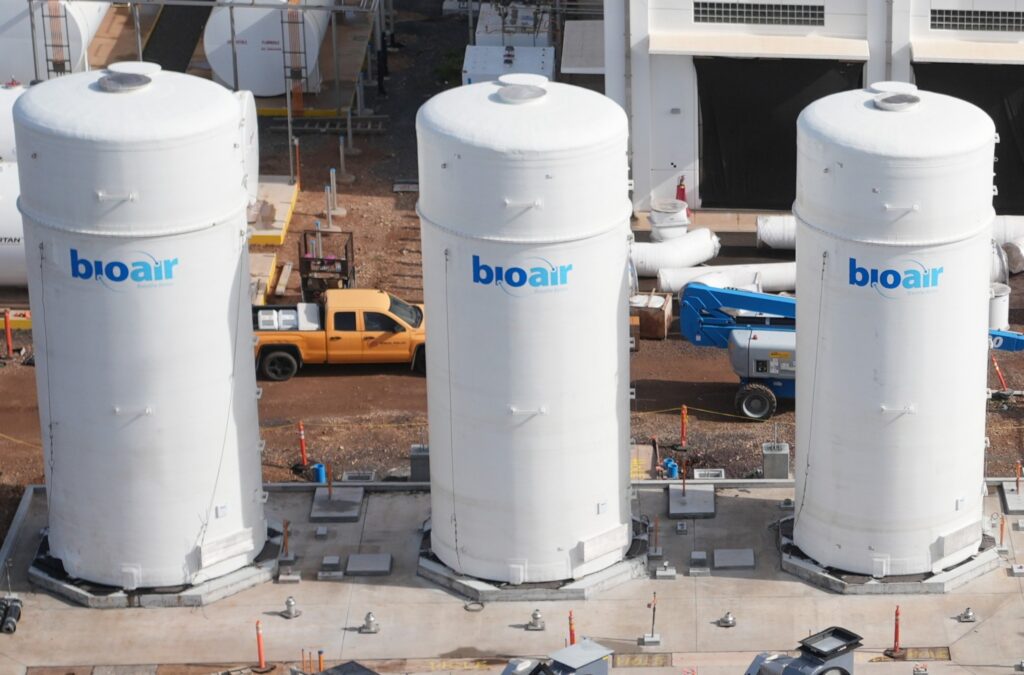
Honouliuli also incorporates two types of odor control systems to address varying conditions across the facility. A biotrickling system uses biological treatment for higher-concentration odor sources, while a biofilter system using carbon media captures contaminants from lower-concentration air streams. Together, these systems provide odor management from the headworks through solids processing.
Delivering Modern Wastewater Treatment Infrastructure
Modern wastewater treatment plants depend on an array of interconnected systems working together around the clock. Decisions made in one stage can affect capacity, energy use, maintenance requirements and performance throughout the facility.
For utilities planning new facilities or upgrading existing infrastructure, understanding those connections early can help identify solutions that support both immediate project needs and long-term operations. Hensel Phelps brings lessons learned from projects like Honouliuli to help owners evaluate those opportunities and deliver facilities built to perform for decades to come. Explore how Hensel Phelps helps utilities address complex water and wastewater infrastructure challenges.
Dive Deeper Into the Treatment Process
For utility teams evaluating upgrades, capacity improvements or long-term operational needs, the details matter. Download the white paper for a more technical look at how treatment systems work together and how those connections can influence plant performance.


