


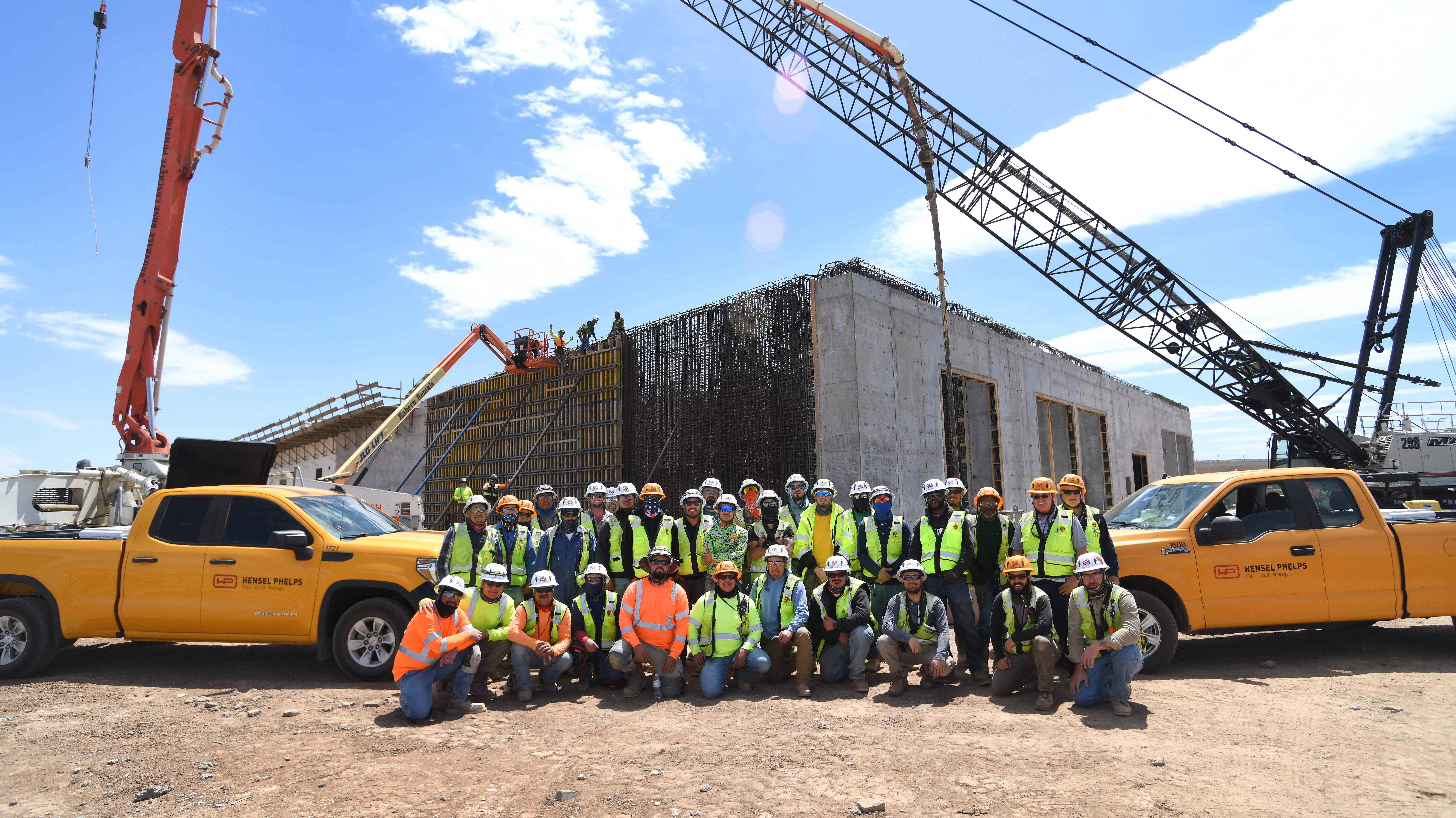
For decades, Hensel Phelps has delivered secure, mission-critical infrastructure that enables the restart of plutonium pit production and prepares the nation for the future of nuclear deterrence. From Los Alamos National Laboratory (LANL) to Pantex Plant and Hill Air Force Base our teams are helping modernize facilities that must meet the highest standards for safety, security and operational reliability.
As the Department of Energy (DOE), National Nuclear Security Administration (NNSA) and U.S. Air Force invest in revitalizing aging systems and transitioning to next-generation capabilities, Hensel Phelps is providing the construction expertise required to execute work in highly regulated, high-consequence environments.
Restarting Plutonium Pit Production for National Security
A core mission of the NNSA is maintaining “a safe, secure, reliable and effective nuclear weapons stockpile.” Central to that mission is the production of plutonium “pits,” a process that had largely ceased decades ago. Today, national defense requirements have driven the need to reestablish pit production, an effort that brings unique challenges.
Much of the infrastructure that once supported pit production no longer meets modern safety, security or environmental standards. Restarting production is not simply a matter of turning systems back on. It requires rebuilding capabilities, replacing failing facilities and constructing new infrastructure that supports today’s operational demands on a fast-paced timeline. These are exactly the conditions where Hensel Phelps excels, bringing proven expertise and dependable delivery to DOE projects.
Supporting Operations at Los Alamos National Laboratory (TA-55)
At LANL, nearly all plutonium operations take place within the Plutonium Facility (PF-4) at Technical Area 55 (TA-55), the nation’s only fully operational, full-capability plutonium facility. As pit production ramps up, the need for modernized support infrastructure across the campus has grown significantly.
Hensel Phelps has delivered multiple projects supporting TA-55 that enhance safety, security and operational efficiency, including:
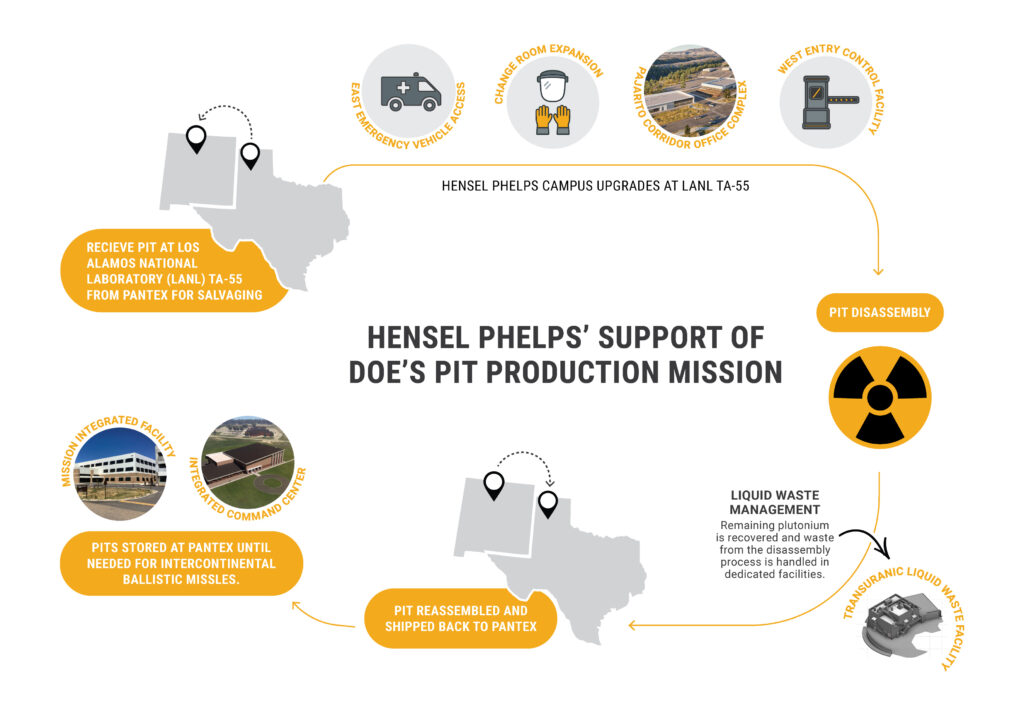
- West Entry Control Facility, supporting the secure movement of personnel into and out of the protected area
- East Emergency Vehicle Access, providing a dedicated inspection lane to ensure priority access for emergency response vehicles
- TA-55 Change Room Expansion, improving locker and restroom facilities to support an expanded workforce
- Pajarito Corridor Office Complex Task Order 1 and 3 (PCOC-1 & PCOC-3), delivering up to 300 office workstations and shared spaces to accommodate increased operations
These projects play a vital role in enabling mission execution beyond the walls of the plutonium facility itself.
Managing Waste and Safeguarding the Environment
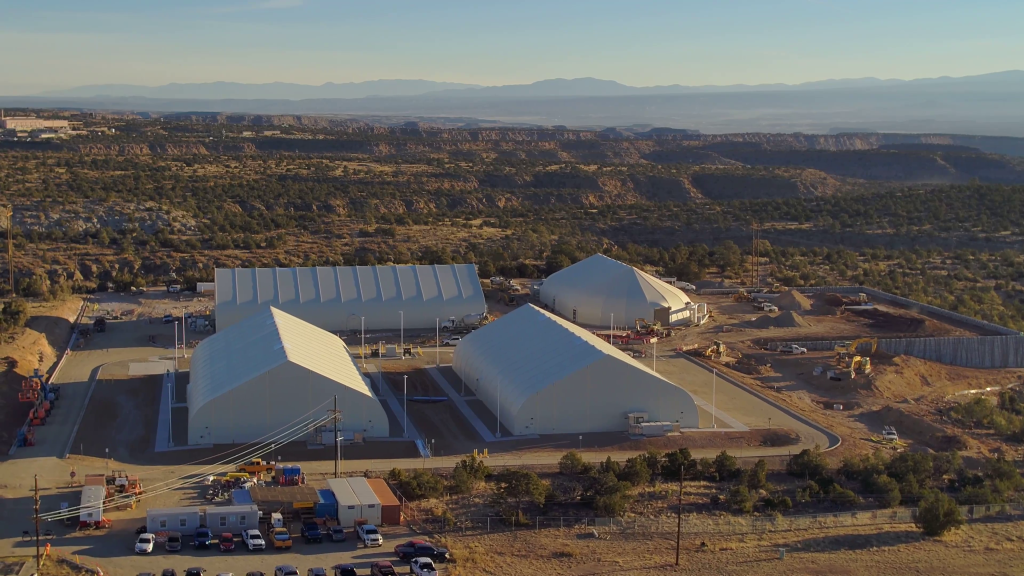
Plutonium operations generate specialized waste streams that must be handled with precision and care. Supporting this requirement is the Transuranic Liquid Waste Facility, constructed by Hensel Phelps to treat radioactive liquid waste generated at TA-55.
The facility houses systems designed to treat liquid waste so it meets stringent acceptance criteria before entering low-level liquid waste systems. Hensel Phelps delivers infrastructure that supports environmental compliance and long-term stewardship, helping critical operations continue safely and responsibly.
Completing the Pit Lifecycle at Pantex
Plutonium pit production is a multi-site lifecycle that begins and ends at the Pantex Plant near Amarillo, Texas. At Pantex, aging pits are removed from weapons and prepared for shipment to Los Alamos, then later receive newly manufactured pits for storage and integration.
Hensel Phelps supports this mission through the High Explosive Science and Engineering (HESE) Complex, which provides laboratory space, classified and unclassified offices, meeting areas and specialized facilities for high explosives operations. The complex supports work that has been essential to the nation’s nuclear deterrent for decades.
Preparing Infrastructure for the Future of U.S. Nuclear Deterrence
Looking ahead, the United States is transitioning from the Minuteman III intercontinental ballistic missile system to the next-generation Sentinel ICBM. This transition requires extensive modernization of facilities, command centers and support infrastructure.
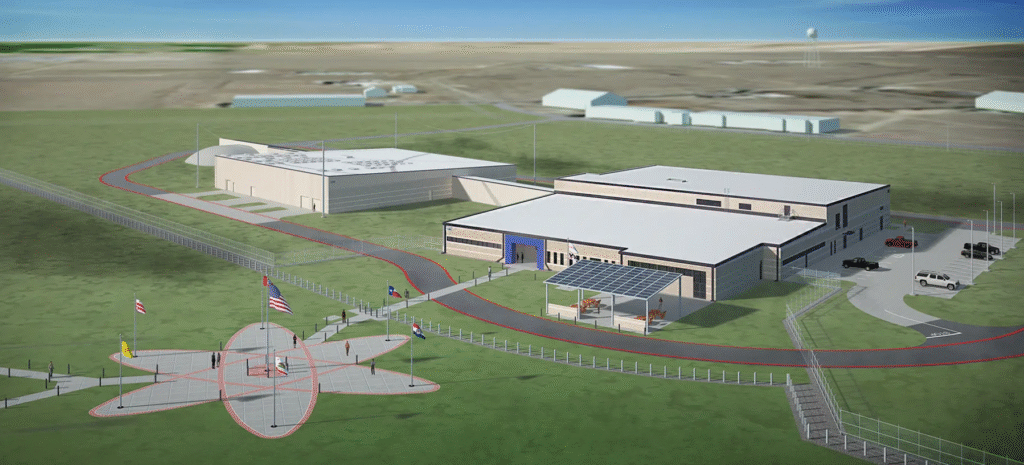
Hensel Phelps recently delivered the Mission Integration Facility at Hill Air Force Base, which supports systems testing, collaboration and integration for weapons programs. Hensel Phelps is also constructing an integrated command center for the ICBM system, designed to include emergency power systems and specialized protection measures.
These projects represent the next phase of infrastructure required to support the nation’s evolving defense mission.
Building with Precision for High-Consequence Missions
Across all locations, Hensel Phelps brings a consistent approach to mission-critical work: disciplined planning, rigorous safety culture and collaboration with federal partners. Our experience spans secure facilities, nuclear and explosives environments, regulatory compliance and long-term program support.
By delivering infrastructure that performs reliably under the most demanding conditions, Hensel Phelps helps enable the missions that protect the nation and assure its allies.
From revitalizing plutonium pit production to preparing facilities for next-generation defense systems, our teams remain committed to building the infrastructure that makes these missions possible, today and for decades to come.
Learn more about Hensel Phelps’ experience delivering complex federal and national security projects.


